The Smart Home are Hitting Its Maturity Moment:
Smart home technology is becoming an increasingly important part of everyday life. Mobile apps are changing the way people interact with their homes, from controlling lights and thermostats to monitoring security cameras and managing household energy.
As we move into 2027, Smart Homes are being enhanced by Artificial Intelligence (AI), increased interoperability, local connectivity, and more advanced automation capabilities. However, homeowners are also becoming more aware of their privacy, security and how they will be affected if they lose the internet.
The big takeaway here is that Smart Home Apps are getting smarter. Manufacturers are putting effort into creating apps that are more responsive, compatible and reliable.
This article talks through the latest advancements in Smart Home Apps, which platforms you should know about and what you should look for when selecting a reliable Home Automation System as a homeowner in 2027.
How Smart Home Apps Are Changing in 2027
Smart home technology is becoming more integrated. This means that there is a single point of control for your entire smart home ecosystem. So you can control all your compatible devices from a single app rather than individual apps for lights, cameras, thermostats and smart appliances.
Several developments are driving this change:
- AI-powered assistants that understand more natural commands.
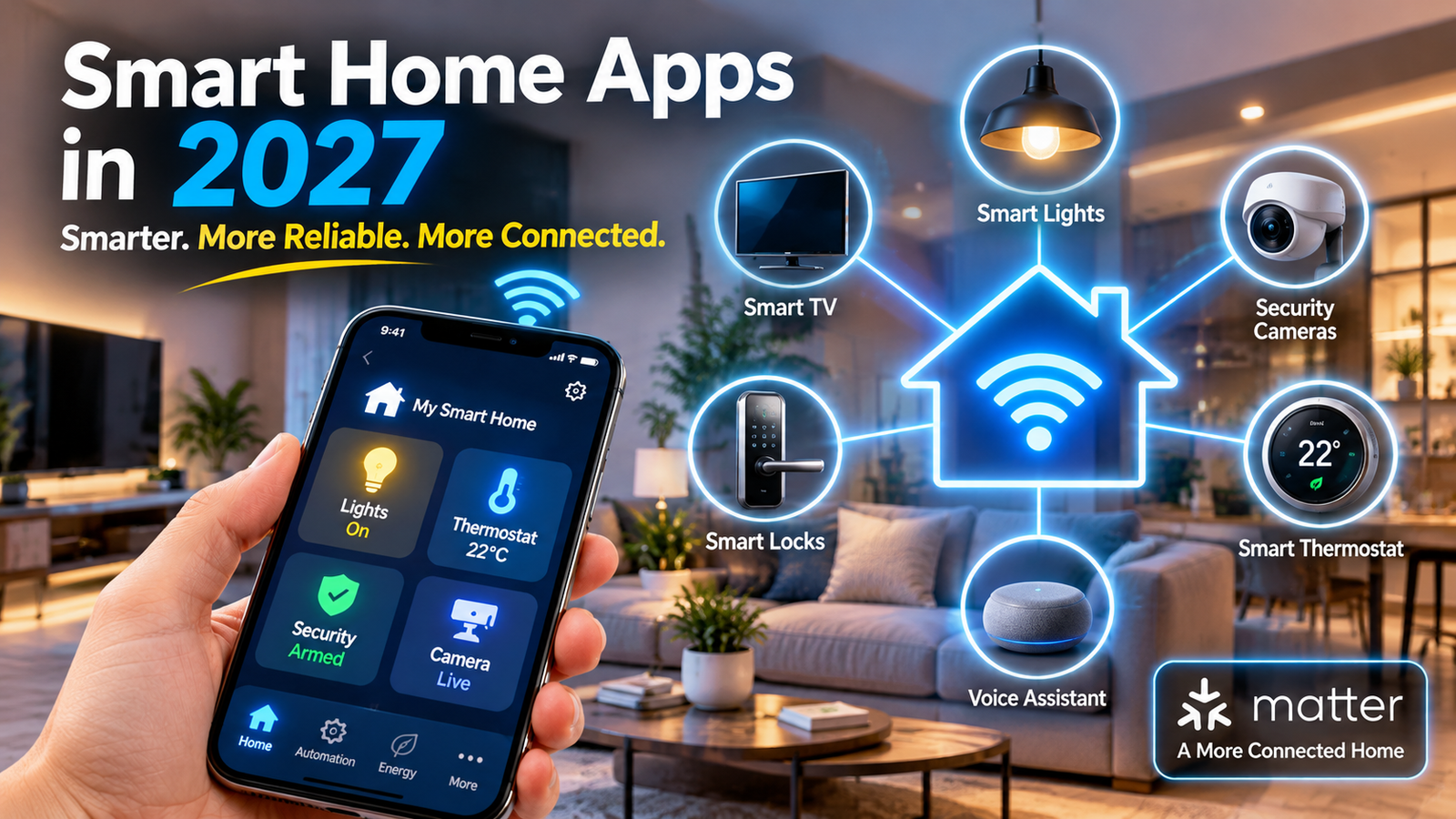
- Improved interoperability through the Matter smart home standard.
- Local device control that can reduce dependence on cloud services.
- More responsive automation and personalized recommendations.
- Better security controls and device management.
These developments are already appearing in products and platform updates released during 2026. Their availability in 2027 will depend on device compatibility, software updates, regional support, and manufacturer implementation.
AI-Powered Home Automation: Smarter Controls and Routines
Artificial intelligence is changing how we interact with our connected devices. Often traditional smart home technology can be quite complex with detailed routines or remembering certain commands. This new generation of AI assistants offer more natural interactions.
Google has improved their multi-action commands, device detection, conversation flow and smart home control with their Gemini for Home upgrade throughout 2026.
Amazon is also working on their Alexa+. Which will be a more natural assistant that can create smart home routines through voice commands.
However, AI does not automatically make a home more reliable. An assistant may misunderstand a command, select the wrong device, or require an internet connection to process a request. For important functions, homeowners should retain straightforward manual controls and verify that automated actions work as intended.
Matter 1.6 and the End of the Compatibility Headache
One of the biggest advancements in smart home technology is the creation of Matter. This is an open standard developed by the Connectivity Standards Alliance.
The goal of this is to allow compatibility between devices within supported smart home ecosystems such as Google Home, Apple Home, Amazon Alexa and Samsung SmartThings.
Historically, compatibility has been an issue for homeowners. When buying a device from a different brand you may find that it does not work with your smart home ecosystem. For example, you may have a smart bulb that works on one platform but would need a different app or bridge to work with another.
What’s new with Matter?
Matter 1.5, released in November 2025, expanded support for cameras, doorbells, energy management, and additional device categories. Matter 1.6 , released in June 2026, introduced improvements including NFC-based device commissioning, shared ecosystem management, and clearer device capability information.
These developments could make setup and cross-platform management easier as manufacturers implement the specifications.
However, Matter compatibility does not guarantee that every feature will work in every app.. You will likely have to use the original device app to get more advanced features, cloud functionality and bespoke features provided by the manufacturer.
Always look to ensure the product is Matter certified, supports the device types you require and works with your current hub.
The Best Smart Home Apps to Consider
The best smart home app depends on the devices you own, the ecosystem you prefer, and the features you need. These four platforms are among the major options worth evaluating.
Google Home
Google Home is a strong option for households using Google Nest devices, Android phones, and compatible Matter products.You can manage your devices, set up routines, manage your cameras and use Google Assistant and Gemini for Home.
In 2026, Google brought some great updates including enhanced playback for cameras, improved setup for devices, control of automation and local control of Matter devices. This has helped with real issues that people were having with cameras not reconnecting and devices showing offline when they shouldn’t be.
Google Home is particularly useful for users who want voice control and a centralized interface for compatible devices.
Apple Home
Apple Home is designed for users invested in the Apple ecosystem. It supports compatible lights, locks, sensors, cameras, thermostats, and other connected accessories. The system has a strong emphasis on privacy, security and integration with Apple. You can control your accessories using the Home app, Siri and Apple home hubs.
The new Apple Home system also allows you to use features like guest access, activity logs and robot vacuums with compatible devices.Before you choose Apple Home, make sure your accessories and home hubs are compatible. Some features require supported hardware and up-to-date software.
Amazon Alexa
Amazon Alexa is widely used for voice-controlled home automation and connected entertainment. The Alexa app allows control of compatible smart devices, set up of routines and smart home management. Alexa+ offers more AI conversation functions and can help you set up routines using your voice.
If you have Echo devices, compatible security and smart appliances then Alexa is definitely worth considering. Like other platforms, there are certain Alexa+ functions which will need compatible devices, subscriptions or be regionally available.
Samsung SmartThings
Samsung SmartThings is designed to help you manage your connected appliances and smart home devices. The October 2026 update includes SmartThings Now, an updated smart home experience, local control, and support for Matter 1.6. Samsung stated “Local control can provide faster response times and ensure compatibility devices remain controllable even if there are issues with your network.”
This is especially useful for those with Samsung appliances, TV’s and devices that are compatible with this system..
How to Choose a Reliable Smart Home App
Before committing to a smart home platform, evaluate it using the following criteria.
- Compatibility: Confirm that the app supports your existing devices and the products you plan to purchase. Look for Matter certification where appropriate.
- Reliability: Read recent user reviews and investigate recurring reports of crashes, connection failures, or broken automations.
- Security: Check whether the manufacturer provides regular software updates, account protection, and clear privacy policies.
- Ease of use: Device setup, routine creation, and everyday controls should be straightforward for everyone in the household.
- Offline functionality: Determine whether essential functions remain available without internet access.
- Long-term support: Consider the manufacturer’s update history, product support commitments, and whether the app depends on discontinued hardware.
- Data control: Look for clear options to manage recordings, delete personal information, and remove household members.
The most dependable app is not necessarily the one with the largest number of features. It is the one that works consistently with your devices and gives you control when something goes wrong.
What Homeowners Should Expect From Smart Home Apps in 2027
The future of smart home apps will probably focus on intelligence, compatibility and reliability.
AI assistants could simplify the setup of your routine and make it easier to control multiple devices. Matter should make it easier to connect devices together as more products begin to support it. Local control and improved troubleshooting tools could also improve how well your connected home can recover from connectivity issues.
However, there will always be some inconsistencies. Some features will need new hardware, while others will only be available gradually through software updates. Some may also be limited based on your location or if you have a subscription.To get the most out of your home as a homeowner, look for compatible devices, good security, clear privacy settings and reliable day-to-day performance.
Conclusion
Smart home apps in 2027 are shaping up to be more capable and more interconnected. AI-powered controls, Matter compatibility, improved local connectivity, and better device management are making connected homes easier to use.
However, the smartest home will be the one which keeps your home private, reliable and makes everyday life simpler. By using supported devices, ensuring compatibility, and focusing on security and local control you can have an easy and reliable smart home.