Introduction
In a world where our smartphones have become our regular and non-stop usage for lifetime., it becomes a real disaster when they run out of charge! We all have been there: scrambling for an outlet at the airport or digging through a bag for a tangled cable that somehow always manages to tie itself in knots. But as now the world also advances with new tech and gadgets helping in our daily lives, there is a new piece of technology that can help us out. A wireless power bank is a game-changing technology that promises to keep you charged without the hassle of cords.
Whether you are a tech enthusiast wanting to buy a usb C charger or simply need a reliable portable 10000mah power bank as part of your travels, there are countless options on the market. But can you tell the difference between the high-quality devices from the duds? This guide will walk you through the ins and outs of powerbank with wireless technology, ensuring you make an informed purchase.
What is a Powerbank with Wireless Charging?
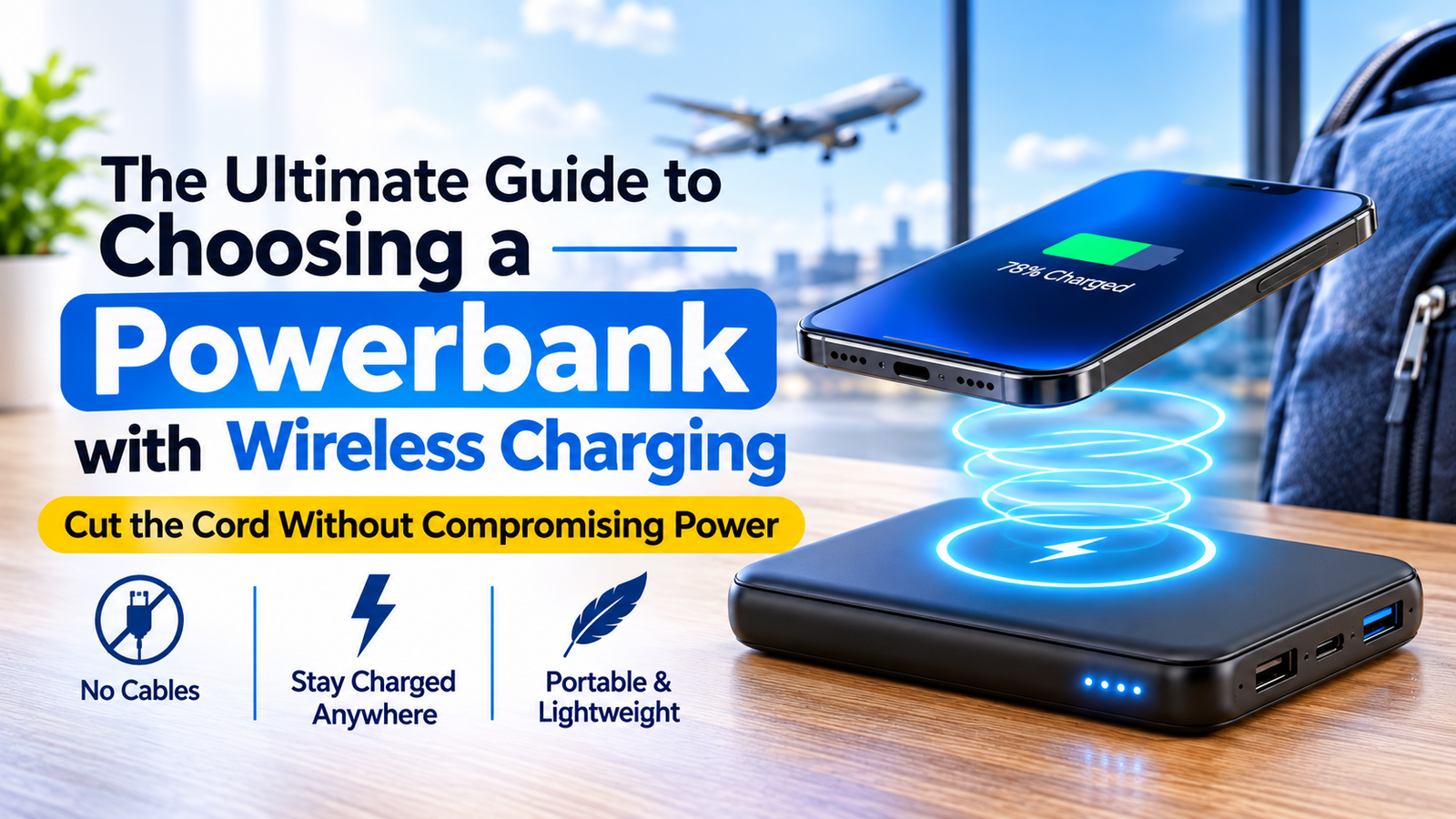
At its core, a wireless power bank is a portable battery pack that functions like a traditional power source but with a major upgrade: it allows you to charge devices by simply placing them on top of the unit, removing the need for a physical cable connection. This uses a technology called inductive charging (Qi standards). These devices uses electromagnetic induction to transfer power between a Qi-enabled charging pad and a device at distances of up to 1.6 inches. . Rather than needing a cable to plug into your phone using a traditional usb battery charger, a wireless power bank creates a magnetic or resonant connection.
It is essentially the combination of two essential gadgets: the portable chargers you know and the wireless charging pads you love. They are simply a combination of portable phone chargers and wireless charging pads. Many modern power banks will have a large inbuilt battery, usb port and wireless coil for charging.
Types of Wireless Chargers in Today’s Devices
Before diving into the specifics of choosing a powerbank with wireless, it helps to understand the landscape of wireless charging standards. Not all wireless tech is created equal.
- Qi (Inductive) Charging: Qi wireless charging uses electromagnetic induction. When you connect the Qi pad to a power source it creates an electromagnetic field using the coil. This can then be converted back into electricity by the receiving coil in the Qi compatible device to charge the battery. The wireless power bank contains a transmitter coil, and your phone has a receiver coil. When aligned, they transfer power. This is the standard for most devices today, including iPhones and Androids.
- Magnetic Charging (MagSafe): This device is mostly used by Apple phone users increasing the demand by Apple, this uses magnets to perfectly align the charger with the device. A wireless power bank with MagSafe compatibility snaps onto the back of an iPhone, ensuring the coils are aligned for maximum efficiency.
- Resonant Charging: This allows for charging at a slightly greater distance and with more freedom of placement on the pad, though it is less common in portable battery packs than inductive charging.
Portable Wireless Power Bank
A portable wireless charger power bank is a device designed to be used on the go. They have a built-in battery so no. The portable wireless charger power banks are perfect for when you are out and about. If there are no free sockets in the coffee shop you can just put your phone on top of your wireless power bank. They can come in a variety of sizes from a mini power bank to big heavy duty bricks.
They are a great alternative to charging from a wall and portable batteries. They are really easy to use so you don’t even have to worry about cables. Often they also can be used as a portable battery charger for other gadgets. These are great for bridging the gap between charging via a wall plug and having a portable battery. They’re very convenient to use as you can just place your phone down rather than fiddling with a cable. Often they’re also a portable battery charger for other devices too.
Key Features to Consider
Buying a wireless power bank is an investment in convenience, but you need to check the specs to ensure it fits your lifestyle.
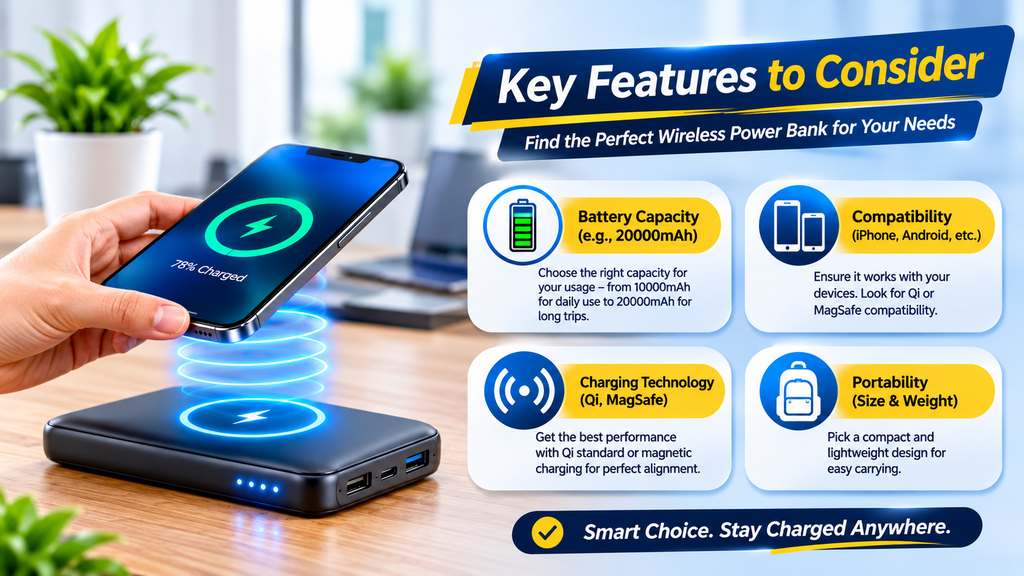
Battery Capacity
Capacity is king. The capacity of a wireless power bank is measured in milliampere-hours (mAh).
- 10000 mAh power bank: This is the most popular size. Most people would go with the standard 10000mah powerbank which will be small enough to fit into pockets or small bags. It will give you between two or three full charges on a standard smartphone.
- 20000mAh: If you’re going camping or on long trips then this is the size for you. These are quite heavy. Wireless charging isn’t as efficient as wired charging so you will lose some battery to the heat
- Mini power bank: These will usually be between 5000mAh and 10000mAh. They are perfect for quick emergency charges but won’t last all weekend.
Compatibility with Devices (iPhone, Android, etc.)
Not every wireless power bank plays nice with every phone.
- iPhone Users: If you have an iPhone 12 or the latest models, look for a magnetic wireless power bank. It will snap to the back of your phone and charge efficiently. Ensure it supports 7.5W or 15W charging for iPhones.
- Android Users: Most modern Androids (Samsung, Google, etc.) support the Qi standard. However, check if the wireless power bank supports fast charging protocols like Qualcomm Quick Charge.
Additional Charging Ports
A great wireless power bank doesn’t rely solely on wireless tech. Look for these ports:
- USB-C Port: A usb c power bank is essential for modern devices. This port is often bidirectional, meaning you can use it to charge your phone with a cable or charge the power bank itself.
- USB-A Port: Good for older devices or cables.
- Pass-Through Charging: This allows you to charge the power bank and your phone simultaneously.
Pro Tip: Knowing how to use a portable battery charger is crucial. Ensure you understand how to charge a portable charger using the correct wall adapter (usually USB-C) to keep it ready to go.
Advantages of Wireless Power Banks
Why should you upgrade to a powerbank with wireless? The benefits go beyond just looking cool.
Convenience and Portability
The main benefit is how easy it is to use. You can simply pop your device in and charge without having to fiddle with any cables. This is great if you have a mini powerbank and want to charge your phone in your pocket without any cables hanging out.
Elimination of Cables and Clutter
We all have those drawers of mysterious cables. A wireless power bank will help cut down on this clutter. As you are using a wireless pad you won’t need to carry around a specific cable for your phone, making your travel kit much simpler.
Fast Charging Options
While early models were slow, modern portable battery chargers use fast wireless charging technology. Many can charge at 10W or even 15W which is similar to wired charging. However, wireless charging can cause extra heat to build up and therefore you may see a slight decrease in efficiency compared to using a cable.
Best Wireless Power Banks in the Market
Finding the best device depends on your specific needs. Here is a breakdown of what to look for in different categories.
Top Picks for iPhone Users
For Apple enthusiasts, a magnetic wireless power bank is non-negotiable. Look for models that are certified by Apple (MFi) or offer MagSafe compatibility. These units snap onto the back of the phone, preventing slippage and ensuring the coils align perfectly. They often have a sleek profile and look like a natural extension of the phone.
Best Value Wireless Power Banks
If you are looking for budget options without sacrificing quality, consider a portable 10000mah power bank with wireless capabilities. These usually offer the best balance of price and performance. Look for brands that specialize in usb battery charger technology. You don’t need to spend a fortune to get a reliable wireless power bank; many mid-range options now include fast charging and USB-C inputs.
Features Comparison Chart
To help you visualize what matters most, here is a quick comparison of features based on device types:
| Feature | Low-End / Mini | Mid-Range (Standard) | High-End (Pro) |
| Capacity | 5000mAh – 10,000mAh | 10,000mAh – 15,000mAh | 20,000mAh+ |
| Wireless Speed | 5W (Slow) | 10W – 15W (Fast) | 15W+ (MagSafe/Proprietary) |
| Wired Ports | USB-A only | USB-C + USB-A | Multiple USB-C (Input/Output) |
| Compatibility | Universal Qi | Universal Qi | Device-Specific (e.g., MagSafe) |
| Best For | Emergency top-ups | Daily Commuters | Travelers & Power Users |
Conclusion
Choosing the right wireless power bank is about understanding your daily habits. Are you a frequent traveler who needs a rugged usb c power bank with massive capacity? Or do you just want a mini power bank to keep your phone alive until you get home?
The shift toward powerbank with wireless technology is undeniable. It offers a glimpse into a future where we stop hunting for wall sockets and cables. By understanding the types of wireless chargers, the importance of battery capacity, and the specific needs of your devices, you can select a wireless power bank that keeps you connected, charged, and ready for anything.
Remember, a portable wireless charger power bank is more than just a battery but it is peace of mind in your pocket