Introduction
As the tech industry in 2026 is driven by rapid advancements, wearable technology development has evolved beyond the expectations. In 2026, we can wear smartwatches, fitness trackers, smart rings, and medical monitoring devices to help people understand about their activities like sleep, heart rate, and other health indicators throughout the day.
These devices are changing the mindsets of people the way they think about fitness and personal health. Instead of weekly checkups, now people can monitor their regular life health over time.
In term of business, the market has been growing rapidly. It is expected to reach USD $118.89 billion globally in 2026 (Mordor Intelligence), and could even reach USD $254.31 billion in 2031. While these are predictions only not real values, it demonstrates how much money is being invested into smart wearables.
So how exactly is wearable technology transforming health and fitness in 2026? Let us take a look at some key developments and benefits and limitations.
What Is Wearable Technology?
The question is now what exactly wearable technology is? The Wearable Tech refers to any electronic devices designed to be worn on the body. These devices use a combination of sensors, software, and wireless technology to collect and interpret information related to physical movement, physiological data or our environment.
These devices can provide useful information based on the data they receive. For example, if you are tracking your fitness on a fitness tracker it may show that you’re less active recently. The wearable devices may not measure the same data, and not every reading is suitable for making decisions about your health. It’s important to understand what each device can and cannot do.
1. Personalized Health Tracking
Real-Time Health Monitoring
One of the best advantage of modern wearable that: these devices has the ability to monitor selected health indicators throughout the day.
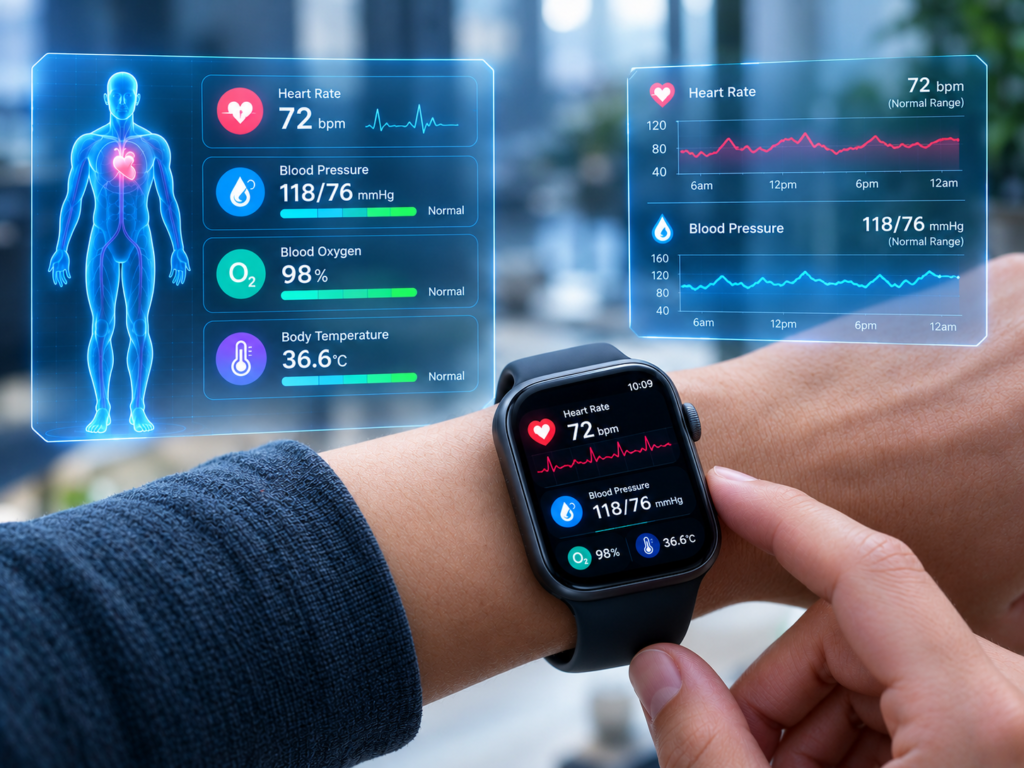
Different models will have different features, users can track heart rate, movement, sleep duration, blood oxygen saturation, skin temperature, and heart-rate variability (HRV).
The Apple Watch Series 12 offers more frequent heart-rate and HRV measurements, tracking sleep, an ECG and readiness app. This can help users understand how their activity, recovery and overall well-being is changing.
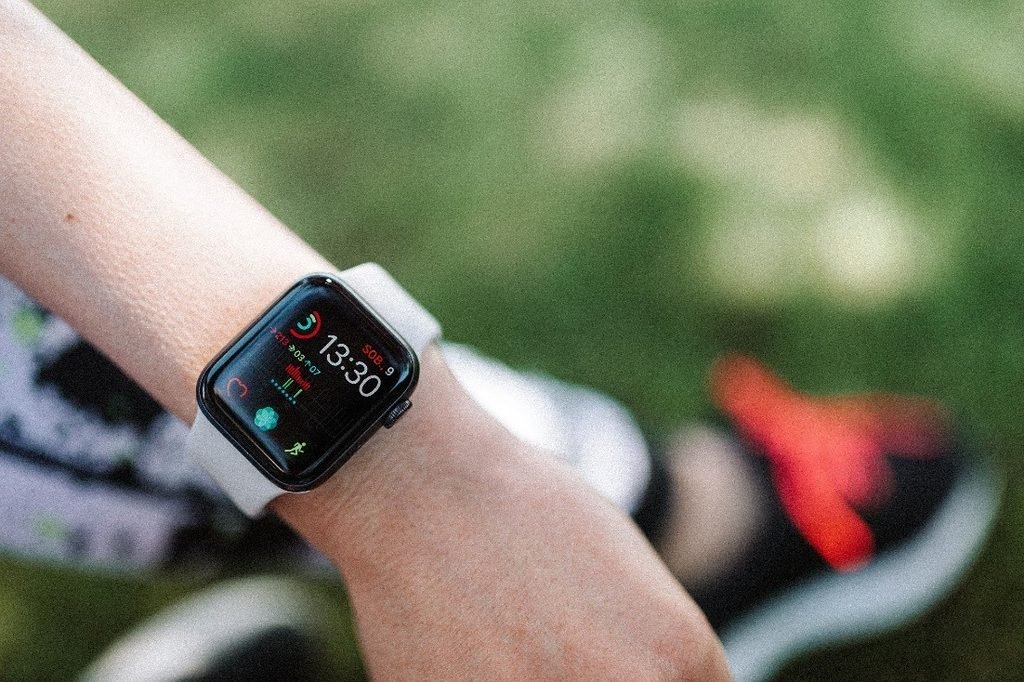
The Samsung Galaxy Watch8 can track health using its health sensors, alongside sleep and fitness features. For example, if you’re consistently getting poor sleep or your resting heart rate has changed, it can help to make changes to your routine or you can consult about it with a healthcare professional.
However, not all health indicators will be constantly tracked. The accuracy can vary between different sensors or activities. Intense activities could therefore have less accurate results.
Setting Personalized Health Goals
Modern fitness platforms can also help users set their targets. Fitbit can give you insights into your sleep and activity. Apple and Samsung will give you a combination of fitness data and readiness/energy scores. This can encourage users to change the intensity of their workouts, create good sleep habits or take recovery days.
The readings collected from these tools such as readiness, energy, and recovery estimates are generated using particular platform. They cannot reliably predict every illness or take the place of clinical testing.
2. Smarter and More Personalized Workouts
Tracking your workouts using wearables
Wearable technology has made tracking your workouts much easier. When working out, a compatible wearable can show your heart rate, speed, distance travelled, estimated calories burnt, time spent working out and also how long you’ve been working out for. Some models can automatically detect your workout, estimate your training load or give you performance metrics for certain sports.
This can help runners to track their pace, cyclists to see if they are training intensely enough and gym users to see how much they are working out. However, do not expect a typical smartwatch to accurately correct your weightlifting form or squat position in real time. It will depend on the device, software and exercises offered.
Connecting Wearables With Fitness Apps
The benefits have extended to many wearable devices are now offering connections to fitness apps on your smartphone.
Using compatible devices, you can track your progress over weeks/months. This can help identify trends in your routine and change your training goals. For example, runners can track their speed and heart rate trends across multiple sessions. If you’re trying to create an exercise routine you may want to look at your weekly summaries to see what days you lack movement.
3. Preventive Health Monitoring and Chronic Disease Support
Detecting Potential Health Problems
Some wearables can identify trends that need to be paid attention to. This can vary depending on your model but may include alerts for irregular heartbeats, unusual high or low heart rates or changes in sleep tracking.
Some smartwatches have ECG features that can give you a one lead ECG. Certain devices also have approved features that can help identify symptoms associated with AFib. For example, Apple state that their supported Apple Watch models have ECG features and sleep apnea alerts. This can depend on the device, software, eligibility and country.
Changes in heart rate, skin temperature and HRV can be associated with illness, stress or changes in recovery. However, they cannot accurately predict all illnesses and cannot replace clinical testing.
Supporting Chronic Disease Management
Wearable technology can be used to help people manage chronic health conditions with appropriate medical devices. Continuous Glucose Monitors work by having a sensor placed beneath the skin to measure glucose levels. They can be paired with compatible smart phones and smart watches to provide users with data on their glucose levels.
It is important to distinguish this from measuring glucose directly with an ordinary smartwatch or smart ring. The US Food and Drug Administration’s safety communication warns that it has not authorized, cleared, or approved smartwatches or smart rings that independently measure or estimate blood glucose without piercing the skin.
Wearable blood-pressure capabilities also vary considerably. Do not assume that a consumer smartwatch can provide clinically reliable blood-pressure measurements unless the specific feature has appropriate regulatory authorization and supporting evidence.
For people with diabetes, hypertension, or heart conditions, wearable readings should complement—not replace—prescribed monitoring, medical appointments, and treatment.
4. Motivation, Accountability, and Healthier Habits
Social Features and Shared Goals
Keeping fit and healthy can be hard, however many wearable platforms aim to keep you motivated by having reminders to move, group challenges, summary data and friendly competitions.
This can be useful as it keeps you accountable in your goals. You can compete with your friends to see who is the most active weekly, and if you have a target to walk more than you can track your progress throughout the day. However, this depends on the individual as some people like to compete with others. Others prefer to set personal goals.
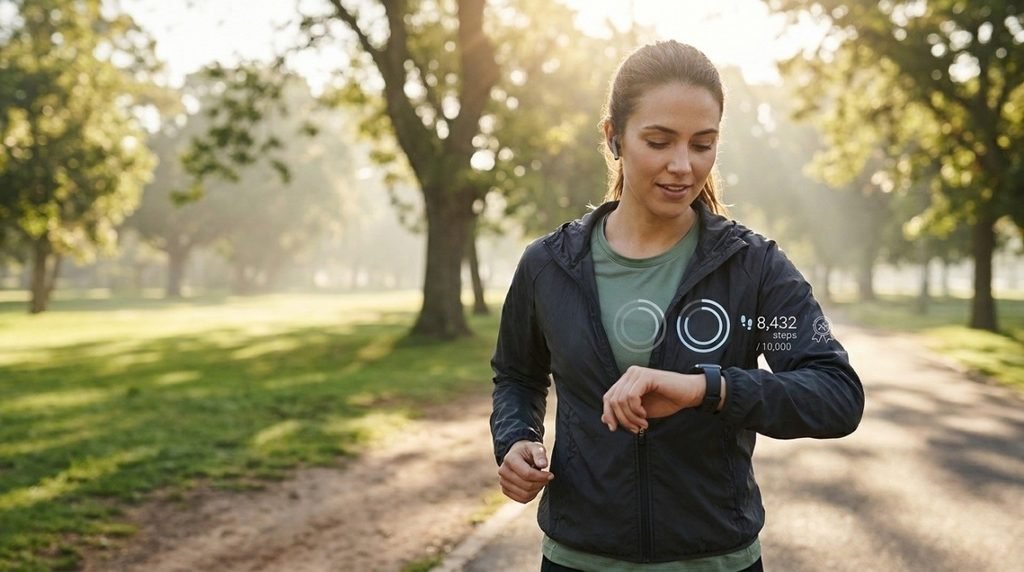
Gamification and Progress Tracking
Many wearable platforms gamify your activity by offering badges, streaks, activity rings and milestones. Some platforms such as Samsung offer an Energy Score and Garmin offer a Body Battery. Both platforms give you simplified data of specific metrics. WHOOP also offer a Recovery score.
This can be useful to spot trends but having a high score does not mean you are healthier. If you do not hit your daily target you do not have to feel like you have failed your fitness goals. The most useful goal to have would be to build sustainable habits. Wearables should help you to keep these habits.
5. The Future of Wearable Technology in Health
Smart Fabrics and Emerging Sensors
The technology behind wearable devices is constantly being developed and researchers are looking into flexible sensory devices, smart fabrics and other wearable electronics that can gather physiological data.
These smart fabrics can one day help measure movement, muscle activity, skin health and even certain chemical indicators in sweat. This can be helpful for research in sport, rehabilitation and remote monitoring.
However, these devices will not be available at the moment. Although they may work in a research setting, further development is needed to create a device that is durable, accurate, comfortable, long-lasting and validated.
From Activity Tracking to More Proactive Health Insights
Future devices could use more long term data and advanced algorithms to find trends in this data. This could help an individual identify changes in their sleeping, activity, and heart rate trends. Clinical systems could allow early identification of certain conditions.
There are not any reliable claims that wearables can predict illness several days before symptoms. Overall this is an exciting direction, however we will have to see if the next step in wearable technology can show they are accurate, have clear regulations, good privacy features and provide real benefits to individuals.
Conclusion: Wearables Are Tools, Not Medical Replacements
Wearable technology has become a new way of tracking activity, exercising, monitoring sleep patterns and specific health metrics. The main benefit of wearing wearable technology includes the ability to track and monitor data over time and provide an overview of trends easily. It can also help with medical care if specific devices are properly validated and used for their intended purpose.
However, issues such as inaccuracies, being too dependent on well-being scores, personal data worries and over hyped marketing can be key limitations.
The market is expecting to grow in the future, Mordor Intelligence estimate the global smart wearable market will increase from 118.89 billion USD in 2026 to 254.31 billion USD in 2031. Grand View Research have estimated the overall wearable technology market to be worth 103.1 billion USD in 2026. However due to the difference in how the market is defined these numbers shouldn’t be added together.
As a consumer it is best to pick what works best for you, know what the sensors can track and keep your health data safe. If there are any medical concerns seek advice from professionals.
Overall, wearable technology can be a great tool to help you get into healthier habits, when used wisely.
Frequently Asked Questions
What is wearable technology in health and fitness?
Wearable technology includes body wearable electronic devices, such as smartwatches, fitness trackers, smart rings, and medical sensors, that collect information about movement or selected physiological signals.
How do wearable devices improve fitness?
They help users in monitoring their activity, heart rate, exercise duration, and training trends. Some also provide recovery estimates, workout summaries, and reminders that can support consistent exercise habits.
Can smartwatches detect medical conditions?
Certain models can notify users about specific patterns, such as signs associated with atrial fibrillation or sleep apnea. These features have defined limitations and do not replace a medical diagnosis.
Can a smartwatch measure blood sugar without a sensor under the skin?
The FDA has not authorized, cleared, or approved a smartwatch or smart ring that independently measures or estimates blood glucose without piercing the skin. A compatible watch may display data collected by a separate continuous glucose monitor.
Are wearable devices worth buying in 2026?
They can be useful for people who want to track activity, review sleep patterns, or follow specific health metrics. The right choice depends on the user’s needs, budget, device compatibility, privacy preferences, and the accuracy of the features offered.
Medical disclaimer: This article is provided as general information only. It should not be used to provide medical advice. Data from wearables is not always accurate or complete. You should not use a consumer wearable device to self-diagnose, self-treat, adjust your medicines or delay seeking urgent medical attention. If you have any medical concerns, please consult a qualified health professional.