The Doctor Is Now in Your Pocket.
Imagine waking up to a subtle vibration on your hand, not a notification, but a warning being quietly given by your smart ring that your blood pressure has been rising overnight. You glance at your phone, review the data, and share the information with your personal physician before starting your regular routine. No clinic visit. No waiting room. No white coat anxiety skewing the numbers.
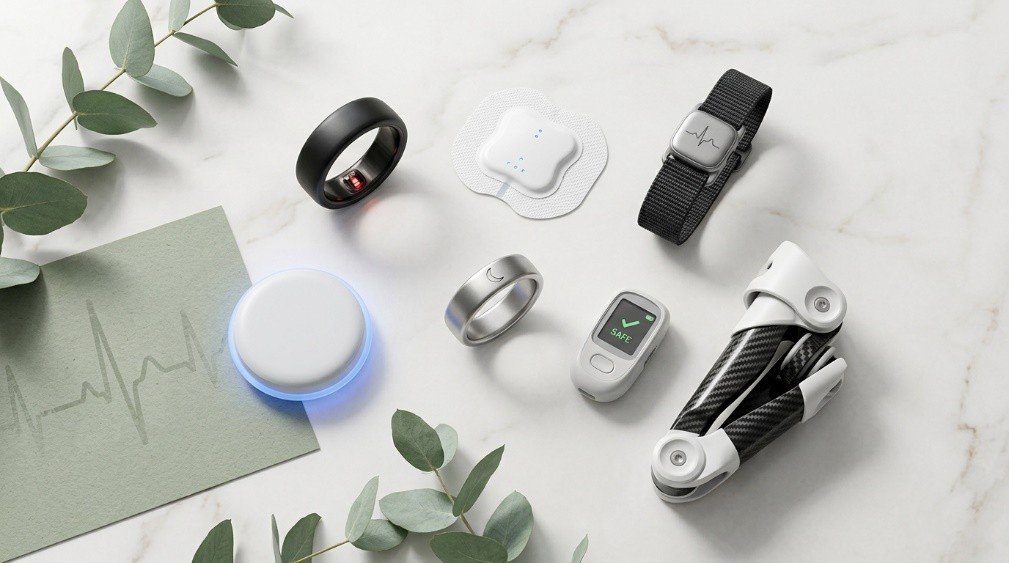
This is not a futuristic fantasy. It became the reality of healthcare in 2026, where portable health gadgets have evolved to a daily life necessity. The global market of wearable medical gadgets has surged to USD 103 billion in 2025 and is now aiming to reach USD 117 billion in 2026. These devices are no longer just counting steps they are reshaping how we monitor, manage, and even prevent emergency situations.
Why Portable Health Gadgets Are Becoming Daily Life Essentials
Portable health gadgets are now being used in the regular life because they have made it easier for regular checkup for which we have to get clinical precision as an everyday convenience. These devices are transforming the occasional measurements limit to annual physicals into continuous, passive health monitoring that fits seamlessly into daily routines.
The benefits to lifestyle are tangible. For people who are facing the chronic diseases like hypertension or diabetes, these devices provide a real-time feedback which informs about the daily schedule of diet, exercise, and medication. A 2025 Harvard Health report emphasizes that regular monitoring of blood pressure, blood sugar, heart rhythms, and oxygen saturation helps manage existing conditions and alerts users to changes worth discussing with their doctor. This development encourages individuals to take their personal healthcare measures rather than waiting for symptoms to escalate.
The 7 Portable Health Gadgets Transforming Care in 2026
1. Cuffless Blood Pressure Smart Ring
As the world is now evolving into advance tech of wearable gadgets helping in our daily life, the rings have evolved too into smart tech monitoring your heart rate, measuring your blood pressure level and tracking your activity during your sleep time. The Cuffless blood pressure ring, launched in October 2026, is the first wearable ring that continuously measures your blood pressure without a cuff or external calibration. This Device uses photoplethysmography and bioimpedance, which captures blood pressure throughout the day and night, offering a much more accurate data than episodic cuff.
Real-world impact: Hypertension is the foremost and modifiable risk factor which can cause heart disease like stroke and dementia. The continuous monitoring of your health reveals patterns like elevated nighttime blood pressure which single readings fail to detected entirely.
2. Wearable Chest Patch for Hospital-at-Home Care
The hospital level care is increasingly shifting into your homes introducing the wearable chest patches are making it possible. These Chest patches are designed as a cardiac patch, is ideally suited for both in-hospital and at home for patient monitoring applications In 2026 wearable chest patches effectively monitored vital signs in acutely unwell patients receiving hospital-level care at home. The VitalPatch, can be worn for up to seven days, awhich utomatically measures heart rate and breathing rate, transmitting data to hospital-based teams in real time.
Real-world impact: This kind of active monitoring is particularly helpful for the people pf old ages or frail patients who may struggle with manual measurements. It allows clinical teams to identify deterioration sooner, adjust treatment, and focus home visits on those who need urgent support.
3. AI-Powered Ambulatory ECG Wearable
Cardiac health care is facing a supply-demand crisis as the rapid increase in patients need more reliable monitoring system for the cardiac assessment. Peerbridge Health’s COR which received the clearance in September 2026, designed continuously detecting cardiovascular and cardiopulmonary conditions using AI-based software, multi-channel ECG for up to 14 days. Continuous ECG monitoring has become an important way to overcome the limitations of intermittent readings. Advances in wearable biosensors and long-term ECG acquisition now make it possible to monitor cardiac rhythm continuously over extended periods
Real-world impact: By identifying electrical, structural, and functional deterioration before a worse event occurs, this technology moves cardiac care upstream and marks a fundamental shift from reactive treatment to proactive prevention.
Continuous glucose monitors have transformed diabetes management, and their usage continues to expand. In 2026, Continuous glucose monitors (CGMs) are the wearable devices that made the blood and sugar controlling more effective and convenient for people with diabetes weights and sleep issues.
CGMs delivers real-time glucose measurement through a small sensor worn on the body, removing the need for changing finger sticks every time. Users can observe how some specific diet, activities, and stress affect their glucose levels, enabling personalized lifestyle adjustments.
Real-world impact: For people with type 1 diabetes, CGMs are life-saving. For the broader population, they are becoming tools for metabolic health optimization assisting the users in understanding their body’s unique responses to everyday choices.
5. Smart Sleep Apnea Ring
Sleep apnea affects millions of people worldwide, yet many cases still remain undiagnosed Sleep apnea is a condition where breathing repeatedly stops and starts during sleep. The Happy Ring received a second FDA class II clearance in October 2026 for at-home diagnosis of distractive sleep apnea and insomnia, allowing to control or enhance the access to vital sleep health solutions.
The Circular Ring 2 takes matters further with continuous SpO2 monitoring, sleep-stage tracking, and the world’s first algorithm for generating health insights. A smart ring cannot diagnose sleep apnea, but it can identify warning signs accurately enough to encourage you to consult a doctor.
Real-world impact: It can detect sleep disorders linked to cardiovascular disease, cognitive decline, and metabolic functioning. Early detection through a wearable ring improve the health while we sleep and help us to get the feedback on our insomnia or sleep.
6. Portable Allergen Detector
For people who have severe allergies from food, that every meal served is a calculated risk. The Allergen Alert, showcased at CES 2026, is a handheld device that tests food for the people who have allergies from some specific food. It was developed by a French father whose daughter experienced anaphylactic shock after eating.
Real-world impact: This device reduces a life threatening condition into a manageable, on-the-spot test. For families who manages the food allergies, it offers peace of mind and greater freedom in daily life.
7. Lightweight Exoskeleton for Mobility Support
Portable exoskeletons are no longer confined to rehabilitation clinics. The Dnsys X1, weighting just 1.6 kg, allowing use of curved carbon rods and a controllable device that recognizes the user’s gait and intent in real time. It assists with knee lift during walking, running, or hiking, reducing joint pain and helping users safe up to 50% of energy.
More than 10,000 units have been sold worldwide since 2021. The company initially focused on hospitals before a five-year-old patient who struggled to walk after brain surgery was able to do so with the exoskeleton and refused to return it.
Real-world impact: For people with mobility challenges whether from injury, surgery, or aging, this technology extends independence and reduces the physical toll of daily life movement and tasks.

How Portable Health Gadgets Are Shifting Healthcare to Regular Checkups
The most profound influence of portable health gadgets is not technical but it’s cultural. They are changing when, where, and how people engage with their health.
Traditionally, the healthcare system is now improving. People visits a doctor when they feel unwell, and they get medical treatment. Portable health devices mitigate this issue, as now people actively track their health.
With continuous monitoring, every day becomes a checkup. Blood pressure trends emerge over weeks, not moments. Heart rhythms are captured during normal daily activities, not just during a clinic visit. Glucose responses to meals are visible in real time.
These changes result in:
- Earlier detection of irregularities such as atrial fibrillation, sleep apnea, or high blood pressure,
- It’s more effective treatment and overall management of chronic diseases,
- Reduced strain on the healthcare system
- Also increases the opportunity for patients to actively participate in managing their health anytime.
Conclusion
These 7 portable health Gadgets that are set to change healthcare in 2026. They are improving the fundamental and essential daily medical checks for people and their health. It is a way of life that puts your health into your hands. With the help of rings that measure cuffless blood pressure and smart wearables devices that can continually monitor your ECG with the help of an artificial intelligence algorithm, you can stay as healthy as possible.
Health monitoring used to be once or twice per year with a trip to the doctor. Now it can be any time you need it and can be used in day-to-day life. These cool devices are the future of health monitoring and should be the forefront of what we use to monitor our health every day.