Outline
Introduction to Garage Door Sensors
Importance of Garage Door Safety Sensors
Overview of Garage Door Sensor Types
How Do Garage Door Sensors Work?
The Technology Behind Garage Door Safety Sensors
Function of Garage Door Opener Safety Sensors
Types of Garage Door Sensors
Garage Door Motion Sensors
Garage Door IR Sensors (Photoelectric)
Overhead Garage Door Sensors
Common Issues with Garage Door Sensors
Identifying Faulty Garage Door Sensors
Garage Door Sensor Replacement: When and How
Enhancing Garage Door Security
Installing Additional Garage Door Safety Sensors
Are Garage Door Sensors Universal?
Conclusion
Frequently Asked Questions (FAQ Schema)
Best Garage Door Sensors: The Ultimate Guide to Safe Operation & Maintenance
Introduction to Garage Door Sensors
Your garage door sensors are the guardian of your home protecting it silently. Maybe you may not think about them daily, but these small devices are the difference between a convenient entryway and a serious safety hazard. If your garage door safety sensor fails, anyone can enter your home without any disturbance or hurdles.
Understanding the concept of how these garage door safety sensors function and how to maintain them is essential for every homeowner. This guide will break down the technology, troubleshooting and replacement of the garage door sensors so you can ensure your security and reliability.
Importance of Garage Door Safety Sensors
The stakes for garage door safety sensors functionality are incredibly high
The stakes for garage door safety sensor functionality are incredibly high. According to the US Consumer Product Safety Commission (CPSC), approximately 73 children between the ages of 2 and 14 have been trapped and killed under automatic garage doors since March 1982 averaging about three deaths per year.
To counter these situations, federal law changed the industry production. Since 1993, external entrapment protection such as garage door safety sensors or edge sensors has been mandatory for doors opening. Today’s garage door opener safety sensors are not just accessories; they are legally required life-safety devices. The UL 325 standard now mandates that operators must have at least two entrapment protection mechanisms: an inherent reversing system and either an electric eye (garage door IR sensor) or an edge sensor.
Overview of Garage Door Sensor Types
When shopping for the best garage door sensors, it helps to understand the primary categories. Most residential systems rely on a pair of garage door IR sensors (photo eyes) mounted at the base of the tracks. However, the broader category of garage door sensor technology also includes garage door motion sensors used for automation and overhead garage door sensors utilized in commercial or high-clearance settings.
How Do Garage Door Sensors Work?
The Technology Behind Garage Door Safety Sensors
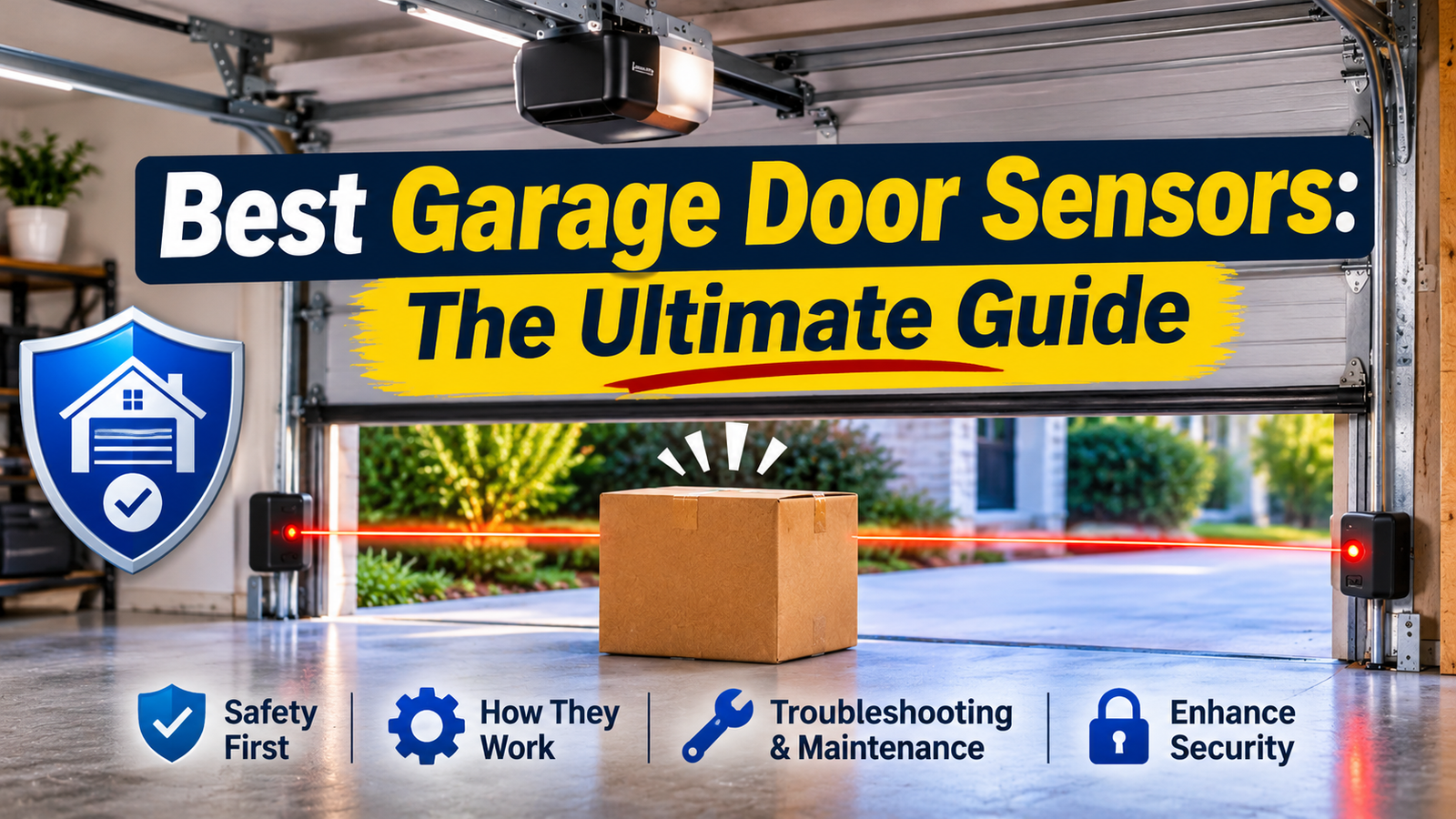
At their core, most garage door safety sensors use infrared technology. A garage door IR sensor system consists of two units: an emitter and a receiver. The emitter projects an invisible infrared beam across the door opening to the receiver. This continuous beam creates an invisible tripwire. When the beam is broken by an object, pet, or person, the receiver immediately signals the garage door opener safety sensor logic board to reverse the door’s direction.
Function of Garage Door Opener Safety Sensors
The primary function of a garage door safety sensor is to prevent the door from closing on an obstruction. Per UL 325 guidelines, these garage door safety sensors must be installed with the beam no higher than six inches above the garage floor to effectively detect small children or pets. This low mounting height is a critical detail for any garage door safety sensor installation.
Types of Garage Door Sensors
Garage Door Motion Sensors
While garage door safety sensors prevent objects getting crushed and enhances the convenience. These sensors (often Passive Infrared or PIR) detects the body heat and movement. They are frequently integrated into modern openers or smart garage controllers to automatically turn on lights or open doors as you approach with your vehicle.
Garage Door IR Sensors
The garage door IR sensor (photoelectric eye) is the most common safety device. These are the garage door safety sensors mounted on the left and right tracks. Through-beam garage door IR sensors are preferred for their reliability; because the beam travels directly across the opening, they offer consistent performance even in dusty environments compared to reflective alternatives.
Overhead Garage Door Sensors
In commercial or specialized residential setups, overhead garage door sensors provide presence detection. Unlike a garage door IR sensor that shoots a beam across the floor, overhead garage door sensors may use microwave or active infrared technology to create a detection zone directly beneath the door’s path, ensuring the area is clear before downward travel begins.
Common Issues with Garage Door Sensors
Identifying Faulty Garage Door Sensors
If your door refuses to close, your garage door sensors are the usual suspects. Look at the LED lights on your garage door safety sensor units. A solid green light typically indicates alignment and power. If a garage door sensor light is blinking, off, or flickering, you have a problem.
Common culprits include:
Misalignment: The most frequent issue. Garage door sensors get bumped, causing the beam to miss the receiver.
Dirt and Cobwebs: Debris on the garage door IR sensor lens blocks the beam.
Sunlight Interference: Direct sunlight can “blind” older garage door safety sensors.
Faulty Wiring: Rodents or corrosion can sever the connection to your garage door opener safety sensors.
Garage Door Sensor Replacement: When and How
If cleaning and aligning your garage door sensors doesn’t resolve the issue, replacement may be necessary. Most garage door sensors last 10 to 15 years. The good news is that replacing a garage door safety sensor is a manageable DIY task:
Cut the Power: Unplug the opener before touching any wiring.
Remove the Old Unit: Unscrew the garage door safety sensor from the bracket and disconnect the wires.
Install the New Sensor: Mount the new garage door sensors at the same height (4–6 inches above the floor). Connect the wires, matching the polarity (striped to striped).
Align and Test: Adjust the garage door sensors until both LED lights are solid. Test the system by passing an object through the beam to ensure the door reverses.
Enhancing Garage Door Security
Installing Additional Garage Door Safety Sensors
While your primary garage door safety sensors handle entrapment protection, you can layer security with smart sensors. Garage door motion sensors can alert you to intruders, while tilt sensors monitor whether the door is open or closed. Integrating these with a smart hub adds a layer of monitoring that basic garage door safety sensors cannot provide.
Are Garage Door Sensors Universal?
A common question is whether garage door sensors are universal. The answer is: mostly, but not always. Many aftermarket garage door sensor kits are designed as universal replacements for major brands like Chamberlain, LiftMaster, Craftsman, Genie, and Overhead Door. However, garage door opener safety sensors from different manufacturers often use proprietary communication protocols. If you are replacing a garage door safety sensor, check compatibility with your specific opener model. Universal garage door sensors often work by splicing into existing wiring and self-programming to the opener’s frequency.
Conclusion
Summary of Key Points
Garage door sensors are the most critical safety component of your automatic door system. From the garage door IR sensor that creates an invisible barrier to the garage door motion sensors that add convenience, these devices work together to protect your family and property. Regular testing, cleaning, and prompt garage door sensor replacement when faults occur are non-negotiable tasks for any homeowner.
Frequently Asked Questions (FAQ Schema)
Q: How do I know if my garage door sensors are misaligned?
A: Look at the LED lights on your garage door sensors. If one or both lights are blinking (usually red or orange) instead of glowing solid, the garage door IR sensor beam is broken or misaligned. Gently adjust the sensor until the lights become solid.
Q: Can I replace my garage door sensors myself?
A: Yes, replacing garage door safety sensors is a common DIY repair. You will need a screwdriver, wire strippers, and a replacement garage door sensor kit compatible with your opener. Always disconnect power to the opener before beginning the garage door sensor replacement.
Q: Are all garage door sensors universal?
A: No. While many aftermarket garage door sensors are marketed as universal and work with major brands (Chamberlain, Genie, etc.), some openers require brand-specific garage door opener safety sensors. Always verify compatibility before purchasing.
Q: What causes garage door sensors to stop working?
A: The most common causes are misalignment from being bumped, dirty lenses blocking the garage door IR sensor beam, direct sunlight interference, or faulty wiring. Regular cleaning and alignment checks can prevent most issues.
Q: How high should garage door safety sensors be installed?
A: Per DASMA and UL 325 standards, the garage door safety sensor beam should be installed no higher than six inches above the garage floor to detect small children and pets