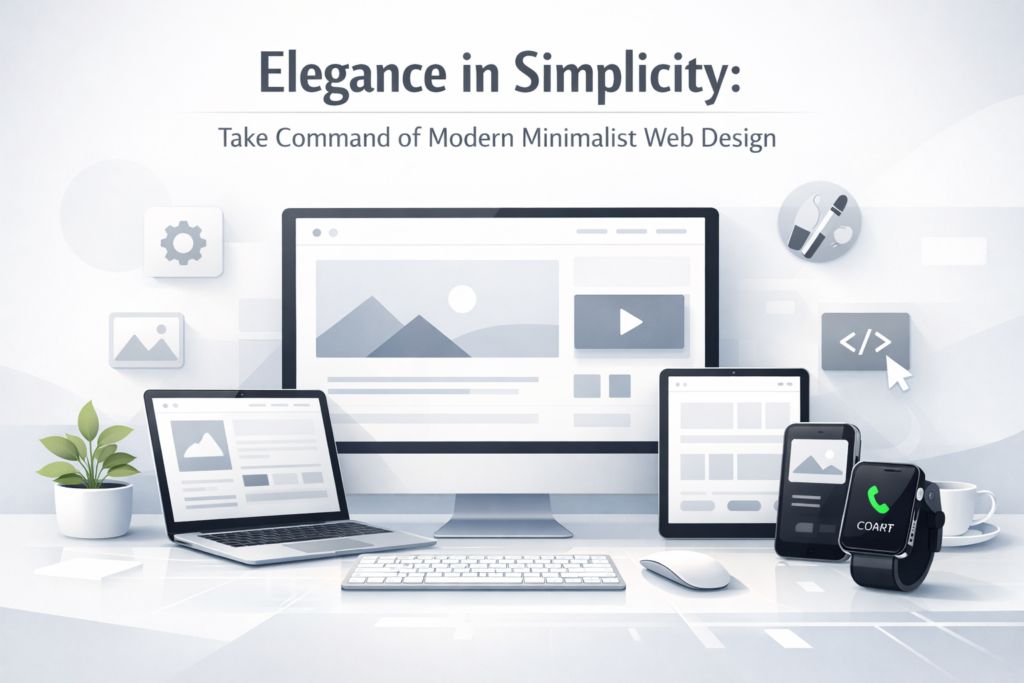
In the 21st century, users no more have the time to check out cluttered designs or decipher complicated navigation routes. This transition in user behavior has given fame to a directive aesthetic that is here to stay: Modern Minimalist Web Design.
Nowadays, the rule is “less is more.” But minimalist design is not only about utilizing white space; it is a planned strategy that concentrates on performance, user experience, and the blast of simplicity.
The Philosophy of “Digital Zen”:
Modern Minimalist Web Design is about disappearing the unwanted so that the want may speak. It is a philosophy that originated in the thought that design had better support the content, not contend with it. By ripping away excessive decorative bits specified as heavy textures, fewer shadows, and auto-playing clips, designers make a “digital zen.” This approach reduces the user’s cognitive load. Once a visitor arrives at a minimalist site, they do not have to search for the “Buy Now” button or the contact form; the site’s base directs them straight away. In this context, solo et represents the balance between simplicity and purposeful design focus.
The Strategic Power of White Space:
Among the most lacking factors of High Converting Minimalist Web Design is negative space, basically reconginzed as white space. Novice designers frequently fear vacant space, considering it makes a site look in a building process. Even so, in minimalist design, white space is an active design factor. It plays as a breathing space for the eyes, bettering readability and comprehension.

Typography and Color as Primary Tools:
When you get rid of the clutter, the factor that stays must be impeccable. In Modern Minimalist Web Design, typography takes center stage. Without decorative backgrounds to conceal behind, fonts must be clear, legible, and characterful. Creaters are moving toward barsh, sans-serif typefaces that make a solid thing and drive the narrative.
Likewise, color palettes are turning limited. Rather than a rainbow of hues, minimalist sites often trust on a monochromatic base with a single “accent color” utilized strategically to direct the user toward conversion points, such as a subscription button or a call-to-action. This assures that when color is utilized, it matters.
Speed and SEO Benefits:
On the far side of aesthetics, there is a virtual, technical benefit to minimalism: speed. A website cluttered with high-resolution clips, complicated scripts, and bulky plugins loads slowly. On the contrary, a minimalist design is light and smooth. Google’s Core Web Vitals prioritize page speed and user experience as basic ranking factors. Hence, embracing Modern Minimalist Web Design is not only a stylistic pick; it is a bold SEO strategy. A faster site brings down bounce rates and better your search engine ranking.
Sum Up:
Finally, Modern Minimalist Web Design is about caring for the user’s time and attention. It takes confidence to make a design down to its essential elements. It gives web designers a hard time asking: “What can I remove to make this stronger?” As we move ahead, the websites that excel will not be the greatest ones, but the ones that interact with clarity, aim, and elegant simplicity. Adopting minimalism is the smartest choice for any brand seeking to build a durable digital impression.
Top of Form
Bottom of Form