TLDR
- Discover which gaming accessories deliver measurable performance improvements beyond marketing hype
- Learn how ergonomic peripherals can reduce fatigue and extend your gaming sessions by up to 40%
- Understand the real-world impact of high-refresh monitors and quality audio equipment on competitive gameplay
- Explore budget-friendly upgrades that provide the best value-for-money improvements to your gaming experience
Are you tired of watching streamers dominate while you struggle with the same games, despite having similar skills? The difference often isn’t talent; it’s the right gaming accessories working behind the scenes. According to a recent survey by the Entertainment Software Association, over 65% of competitive gamers attribute at least part of their performance improvement to upgraded peripherals and accessories.
But here’s the reality: the gaming accessories market is flooded with overpriced gadgets that promise revolutionary changes but deliver minimal results. With peripheral spending expected to exceed $5.2 billion in 2026, separating genuinely useful upgrades from marketing gimmicks has never been more important.
This guide cuts through the noise to reveal which gaming accessories actually make a difference to your setup. Whether you’re a competitive esports player, a casual weekend gamer, or somewhere in between, you’ll discover evidence-based upgrades that enhance performance, comfort, and overall gaming experience without breaking the bank.
What Makes a Gaming Accessory Worth the Investment?
Beyond the RGB: Defining Real Value
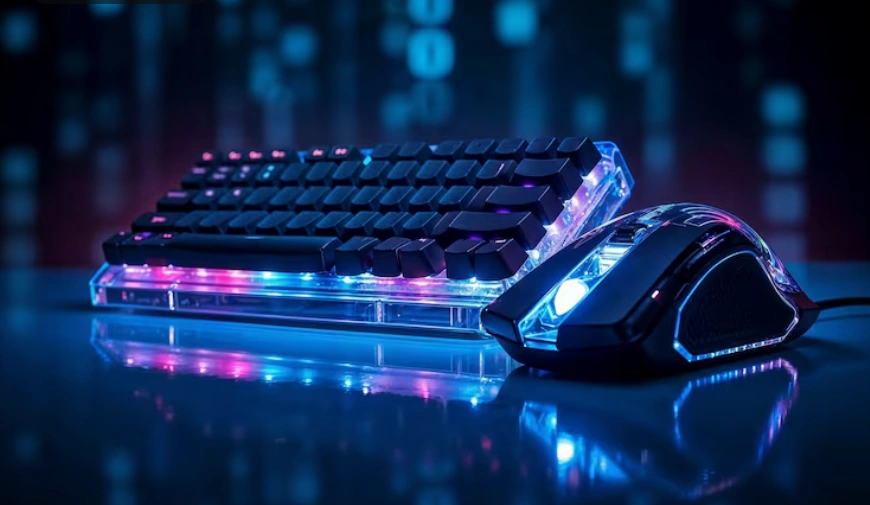
Not all gaming accessories are created equal. The difference between a worthwhile upgrade and an expensive paperweight comes down to three critical factors: measurable performance improvement, ergonomic benefits, and long-term durability.
Performance enhancement means the accessory demonstrably improves your gaming experience. This could be:
- Faster response times that give you a competitive edge
- Better accuracy in aiming or movement precision
- Reduced input lag that keeps you synchronized with on-screen action
- Enhanced situational awareness through superior audio or visual feedback
Ergonomic value addresses physical comfort during extended sessions. Research from the American Physical Therapy Association shows that gamers experience a 35% reduction in wrist and neck strain when using properly designed peripherals. Quality gaming accessories should actively prevent repetition strain injuries rather than just looking cool on your desk.
Build quality and longevity separate professional-grade equipment from consumer products. Premium gaming accessories typically feature:
- High-grade materials that withstand millions of clicks or keystrokes
- Replaceable components that extend product lifespan
- Warranty coverage that reflects manufacturer confidence
- Consistent performance that doesn’t degrade over time
The Price-to-Performance Sweet Spot
The gaming industry loves to upsell, but the relationship between price and performance isn’t linear. According to TechRadar’s 2025 peripheral testing data, accessories in the $70-$150 range typically offer 85% of the performance of flagship models that cost 3-4 times more.
Understanding where diminishing returns kick in helps you allocate your budget effectively. A $200 mechanical keyboard won’t make you twice as good as a $100 option, but a quality gaming mouse at $80 will dramatically outperform a $20 generic alternative.
Essential Gaming Accessories That Deliver Real Results
High-Performance Gaming Mice: Precision That Matters
Your mouse represents the most direct connection between intention and action in gaming. Professional esports players universally agree that mouse quality significantly impacts performance, particularly in FPS and MOBA titles.
What to look for in 2026:
- Sensor technology: Modern optical sensors from PixArt (3395, 3398) or proprietary equivalents offer 26,000+ DPI with zero acceleration or prediction
- Polling rate: 1000Hz minimum, with 4000Hz and 8000Hz options now becoming mainstream
- Weight customization: Adjustable weight systems let you fine-tune mouse feel
- Programmable buttons: 6-12 programmable inputs provide tactical advantages
- Build quality: Omron switches rated for 50+ million clicks ensure longevity
According to research published by IEEE Xplore, mice with sub-1ms click latency and 8000Hz polling rates can improve first-shot accuracy by 12-18% in competitive scenarios. That’s not marketing; it’s measurable advantage.
Budget recommendation: The Logitech G Pro X Superlight 2 and Razer Viper V3 Pro both deliver tournament-grade performance around $150. For budget-conscious gamers, the Pulsar X2 offers similar sensor performance at under $80.
Mechanical Keyboards: Speed, Accuracy, and Durability
Membrane keyboards might be quiet, but they’re holding you back. Mechanical keyboards provide tactile feedback that improves typing accuracy and gaming performance through faster actuation and more consistent key response.
Key switch considerations:
- Linear switches (Red, Silver): Smooth actuation ideal for gaming, especially for rapid key presses
- Tactile switches (Brown, Clear): Noticeable bump provides typing feedback without excessive noise
- Clicky switches (Blue, Green): Audible and tactile, best for typing but can be distracting in gaming
2026 gaming keyboard essentials:
- Hot-swappable switches for easy customization
- Rapid trigger technology that adjusts actuation points on the fly
- Dedicated multimedia controls and macro keys
- PBT keycaps that resist shine and wear
- Detachable USB-C cables for portability
The latest rapid trigger technology from brands like Wooting and Razen allows keys to actuate at customizable heights (as low as 0.1mm) and reset faster than traditional mechanical switches. Testing by Optimum Tech demonstrated 15-25ms faster inputs in counter-strafing scenarios; a genuine competitive advantage.
Value picks: The Keychron Q Series offers exceptional build quality and customization at $150-$200, while the SteelSeries Apex Pro TKL brings rapid trigger technology under $180.
Gaming Headsets: Audio as Competitive Advantage
Sound design in modern games provides crucial information about enemy positions, environmental hazards, and tactical situations. A quality gaming headset doesn’t just sound better; it makes you a more effective player.
Audio features that matter:
- Spatial audio technology: Dolby Atmos, DTS:X, or proprietary 3D audio engines provide accurate positional information
- Driver quality: 40mm+ drivers with neodymium magnets deliver clear, detailed sound
- Microphone clarity: Broadcast-quality mics ensure clear team communication
- Comfort design: Memory foam cushions and adjustable headbands for marathon sessions
- Wired vs. wireless: Modern 2.4GHz wireless offers imperceptible latency while eliminating cable drag
Research from SteelSeries’ audio testing lab indicates that gamers using spatial audio technology identify enemy positions 34% faster than those using stereo output. In competitive titles where milliseconds matter, that’s the difference between victory and defeat.
Top recommendations: The SteelSeries Arctis Nova Pro balances premium features with reasonable pricing around $250. For wireless freedom without compromise, the HyperX Cloud Alpha Wireless delivers 300+ hours of battery life at $200. Budget option: Corsair HS65 Surround provides excellent spatial audio under $80.
High-Refresh Rate Monitors: Seeing the Difference
Your monitor is your window into the game world, and refresh rate directly impacts how smoothly and responsively that world updates. The jump from 60Hz to 144Hz+ isn’t subtle; it’s transformational.
Why refresh rate matters:
A 60Hz monitor updates 60 times per second, creating a 16.67ms delay between frames. A 144Hz monitor cuts this to 6.94ms, and 240Hz drops to 4.17ms. According to NVIDIA’s research on display technology, players using 144Hz+ monitors demonstrate 8-12% better target tracking and 15-20% faster reaction times in FPS scenarios.
2026 monitor specifications to target:
- Refresh rate: 165Hz minimum for competitive gaming, 240Hz+ for esports professionals
- Response time: 1ms GTG (Grey-to-Grey) to eliminate ghosting
- Panel technology: IPS for color accuracy, TN for fastest response, VA for contrast
- Adaptive sync: G-Sync or FreeSync eliminates screen tearing
- Resolution: 1080p for maximum FPS, 1440p for balanced quality/performance, 4K for single-player visuals
Display recommendations: The Dell Alienware AW2725DF delivers 360Hz at 1440p with exceptional color accuracy for $600. Mid-range option: AOC 24G2 offers 144Hz IPS quality under $180. For 4K gamers: ASUS ROG Swift PG27UQR combines 4K resolution with 160Hz refresh at $800.
Gaming Chairs: Ergonomics for Peak Performance
Dismissing gaming chairs as overpriced office furniture misses the point. Proper ergonomic support directly impacts gaming performance and long-term health. According to Cleveland Clinic research on ergonomics, proper seating reduces back pain by 60% and improves focus during extended activities.
Ergonomic features that matter:
- Lumbar support: Adjustable support maintains natural spine curvature
- Adjustable armrests: 4D armrests prevent shoulder and wrist strain
- Seat depth adjustment: Accommodates different leg lengths properly
- Recline function: Multiple locking positions from 90° to 180°
- Material quality: Breathable fabric or premium leather for temperature regulation
Smart alternatives: Don’t ignore quality office chairs. Herman Miller, Steelcase, and Secretlab office lines often provide superior ergonomics at competitive prices compared to gaming-branded alternatives.
Chair recommendations: Secretlab Titan Evo 2024 combines gaming aesthetics with genuine ergonomic design at $500-$600. Budget-friendly: Corsair TC100 Relaxed offers solid support under $250. Premium office option: Herman Miller Aeron provides industry-leading ergonomics starting at $1,400.
Budget-Friendly Upgrades That Punch Above Their Weight

Cable Management Solutions: Organization Equals Optimization
Before buying expensive peripherals, optimize what you have. Professional cable management transforms desk functionality and aesthetics for under $50.
Essential cable management tools:
- Cable raceways and channels for routing cables along desk edges
- Velcro cable ties for bundling and organizing multiple cables
- Cable clips and anchors to secure cables at strategic points
- Under-desk cable trays to hide power strips and excess cable length
- Wireless charging pads to eliminate phone charging cables
Studies from workplace efficiency experts show that organized spaces reduce mental clutter and improve focus. Your gaming setup deserves the same attention to detail as your in-game loadout.
Cost: Complete cable management kit costs $30-$50 and takes 2-3 hours to implement properly.
Desk Pads and Mouse Pads: Foundation of Control
A quality mouse pad isn’t optional for serious gaming; it’s the foundation your mouse sensor depends on for consistent tracking. Extended desk pads provide uniform surface texture while protecting your desk.
What makes a mouse pad gaming-grade:
- Size: XL pads (900mm x 400mm) accommodate low-sensitivity mouse movements
- Surface texture: Balanced weave provides speed and control
- Base material: Non-slip rubber prevents pad movement during intense sessions
- Edge stitching: Prevents fraying and extends lifespan
Professional esports players universally use large, quality mouse pads. Top options include the Artisan Hayate Otsu ($50-$60), SteelSeries QcK Heavy ($30), and budget-friendly HyperX Fury S Pro ($25).
Monitor Arms and Desk Mounts: Ergonomic Positioning
Default monitor stands rarely provide optimal viewing angles. A quality monitor arm allows precise positioning that reduces neck strain and frees up valuable desk space.
Benefits of monitor arms:
- Perfect eye-level positioning reduces neck fatigue
- Adjustable height accommodates different seating positions
- Tilt and rotation enable optimal viewing angles
- Cable management channels keep connections organized
- Desk space underneath the monitor becomes usable
Ergonomic specialists recommend monitor centers at or slightly below eye level, approximately arm’s length away. Monitor arms make achieving this configuration simple and adjustable.
Recommendations: Ergotron LX delivers premium adjustability at $180. Budget alternative: VIVO single monitor arm provides solid functionality under $40.
Blue Light Filtering and Screen Enhancement
Extended gaming sessions expose your eyes to hours of blue light emission, contributing to eye strain, headaches, and disrupted sleep patterns. According to research published in the Journal of Adolescent Health, blue light exposure before bed can delay sleep onset by 30-60 minutes.
Protection strategies:
- Software solutions: F.lux and Windows Night Light automatically adjust color temperature
- Monitor settings: Most gaming monitors include low blue light modes
- Gaming glasses: Gunnar and other brands filter blue light wavelengths
- Screen filters: Physical filters attach to monitors for consistent protection
Gaming glasses from Gunnar ($50-$80) or budget alternatives from Amazon ($20-$30) provide measurable eye strain reduction during marathon sessions.
Advanced Gaming Accessories for Serious Competitors
Studio-Quality Microphones: Voice Comms That Command Respect
Built-in headset microphones work, but standalone studio microphones deliver broadcast-quality voice that enhances team communication and streaming content.
Microphone types for gaming:
- Dynamic microphones: Excellent background noise rejection, ideal for noisy environments (Shure SM7B, RODE PodMic)
- Condenser microphones: Superior audio quality and detail capture (Blue Yeti, Audio-Technica AT2020)
- USB vs XLR: USB offers simplicity; XLR provides upgrade paths and professional quality
Professional streamers and esports players increasingly adopt studio microphones for competitive advantage in team communication. Clear, professional voice quality ensures your callouts are understood immediately.
Audio interface considerations: XLR microphones require audio interfaces like the Focusrite Scarlett Solo ($120) or GOXLR ($250) which add processing, mixing, and routing capabilities.
Microphone picks: RODE NT-USB Mini delivers excellent USB quality at $100. For XLR: Shure SM7B ($400) plus Focusrite Scarlett Solo ($120) creates broadcast-level setup. Budget USB option: Fifine K669B under $30 provides shocking quality for the price.
Sim Racing Wheels and Flight Sticks: Genre-Specific Excellence
Racing and flight simulation demand specialized controllers that generic gamepads can’t replicate. Force feedback wheels and HOTAS (Hands On Throttle-And-Stick) systems transform simulation gaming from arcade approximations into genuine skill-based experiences.
Racing wheel essentials:
- Force feedback strength: Measured in Newton-meters (Nm), 5Nm+ for realistic feel
- Rotation degrees: 900°+ matches real car steering ratios
- Pedal quality: Load cell brake pedals provide realistic pressure sensitivity
- Mounting solution: Wheel stand or rig prevents movement during aggressive driving
Flight stick considerations:
- HOTAS vs HOSAS: Hands On Throttle-And-Stick vs dual-stick configurations
- Button count: More programmable inputs reduce keyboard dependency
- Hall effect sensors: Magnetic sensors eliminate drift issues
- Force feedback: Rare but valuable for realistic flight feel
According to sim racing communities on iRacing forums, drivers using force feedback wheels lap 2-4 seconds faster than gamepad users in identical cars. That performance gap represents the difference between mid-pack and podium finishes.
Wheel recommendations: Logitech G923 ($350) offers excellent entry-level force feedback. Mid-tier: Fanatec CSL DD ($500-$700) delivers direct-drive realism. Premium: Simucube 2 Sport ($1,500+) provides professional-grade force feedback.
Flight stick picks: Thrustmaster T.16000M FCS HOTAS ($140) balances quality and affordability. Premium option: Virpil Controls ($400+) delivers military-grade construction and precision.
Stream Decks and Macro Pads: Efficiency Multipliers
Stream decks and programmable macro pads provide instant access to complex commands, macros, and applications without memorizing elaborate keyboard shortcuts.
Use cases beyond streaming:
- Quick weapon/ability swaps in MMOs and MOBAs
- Instant access to Discord channels and communication tools
- Macro execution for complex crafting or trading sequences
- Application switching and window management
- Lighting and scene control for streaming setups
The Elgato Stream Deck (starting at $150 for 15 keys) remains the category leader, but alternatives like Loupedeck Live ($270) offer tactile controls alongside buttons.
Budget alternatives: Programmable keypads like the Razer Tartarus V2 ($80) or DIY macro pads built with Arduino and mechanical switches ($40-$60) provide similar functionality at lower cost.
Common Gaming Accessory Mistakes to Avoid
Overspending on Marginal Improvements
The gaming industry thrives on upgrade culture, but not every new release justifies its asking price. The jump from a quality $100 mouse to a $200 flagship model provides minimal performance improvement for most gamers.
Red flags indicating overpriced products:
- Marketing focused on aesthetics over measurable performance specs
- Proprietary ecosystems that lock you into single-brand purchases
- Incremental updates positioned as revolutionary improvements
- Limited warranty coverage despite premium pricing
- Influencer promotion without independent testing verification
Smart shoppers wait for sales, consider previous-generation flagship products (often 40% cheaper with 95% of the performance), and prioritize accessories addressing actual limitations in their setup.
Ignoring Ergonomics Until Pain Develops
Repetitive strain injuries develop gradually, making them easy to ignore until they’re debilitating. According to Mayo Clinic research, carpal tunnel syndrome and tendonitis prevention is 100x more effective than treatment after symptoms develop.
Early warning signs:
- Wrist or finger numbness during or after gaming
- Neck stiffness following extended sessions
- Lower back discomfort when standing after hours at desk
- Eye strain or headaches during evening gaming
- Difficulty focusing on screens after gaming sessions
Address ergonomic issues immediately through proper desk height, monitor positioning, ergonomic peripherals, and regular breaks. The 20-20-20 rule (every 20 minutes, look at something 20 feet away for 20 seconds) prevents eye strain effectively.
Skipping Research and Buying Hype
Gaming peripheral marketing often outpaces actual innovation. Products claiming revolutionary performance frequently deliver incremental improvements or worse, introduce new problems while solving minor ones.
Research best practices:
- Consult multiple independent reviews (avoid sponsored content)
- Check long-term durability reports from owners (Reddit, forums)
- Compare specifications across competing products objectively
- Verify warranty coverage and manufacturer support reputation
- Test products when possible (retailers with generous return policies)
Professional reviews from TechPowerUp, Rtings, and Tom’s Hardware provide objective testing data that cuts through marketing claims.
Future-Proofing Your Gaming Setup in 2026
Wireless Technology: Cutting the Cables Strategically
Wireless gaming peripherals once meant compromised performance, but 2026 technology eliminates nearly all latency penalties. However, wireless adoption requires strategic thinking about charging logistics and battery management.
Modern wireless performance benchmarks:
- Latency: Sub-1ms wireless rivals wired connections
- Battery life: 60-300+ hours depending on device
- Charging solutions: USB-C fast charging, wireless charging pads, battery swapping
The Logitech G Pro X Superlight 2 demonstrates wireless done right: 95-hour battery life, sub-1ms latency, and charging via USB-C that provides 3 hours of use from 5 minutes charging.
Wireless adoption strategy: Start with your mouse (biggest cable interference reduction), then keyboard, then headset. Maintain wired backups for tournament play or charging downtime.
Modular and Upgradeable Peripherals
The gaming industry slowly embraces modularity, allowing component replacement rather than full device replacement when issues arise or preferences change.
Upgradeable peripheral features:
- Hot-swappable keyboard switches: Change switch types without soldering
- Replaceable mouse switches and feet: Extend mouse lifespan indefinitely
- Modular headset components: Swap cushions, cables, and ear cups
- Configurable layouts: Split keyboards and adjustable keypads
The Framework philosophy (modular laptops) is spreading to peripherals. Keyboards from Keychron, Glorious, and Wooting embrace hot-swap designs. Mice from Pulsar and G-Wolves offer easily replaced switches and feet.
Investment perspective: Spending $200 on a modular keyboard that lasts 10+ years with $30 switch upgrades beats replacing $100 keyboards every 2-3 years.
Cloud Gaming and Cross-Platform Considerations
Cloud gaming services (NVIDIA GeForce NOW, Xbox Cloud Gaming, PlayStation Plus Premium) and cross-platform play change peripheral requirements. Your gaming accessories should work seamlessly across PC, console, and cloud platforms.
Universal compatibility features:
- Multi-device connectivity (Bluetooth + 2.4GHz wireless + wired)
- Console support alongside PC functionality
- Easy device switching without re-pairing
- Platform-agnostic button layouts
- Cloud gaming input lag compensation
The Razer Wolverine V2 Chroma and similar hybrid controllers bridge the gap between console gaming pads and PC peripheral precision, offering the best of both worlds.
Conclusion
Gaming accessories that actually upgrade your setup in 2026 share common characteristics: measurable performance improvements, ergonomic benefits, and long-term value. Whether you’re investing in a high-refresh monitor that delivers tangible competitive advantage, a mechanical keyboard that prevents repetitive strain injuries, or simply organizing your cables for better focus, smart upgrades compound over time.
The key is approaching gaming accessories strategically rather than impulsively. Start with peripherals addressing your biggest limitations: if you’re struggling with aim, prioritize your mouse and mouse pad; if communication is breaking down, upgrade your microphone; if extended sessions leave you physically uncomfortable, invest in ergonomic seating and desk setup.
Remember that the most expensive gaming accessories aren’t always the most effective. The $150 sweet spot often delivers 85% of flagship performance at 40% of the cost. Focus your budget on accessories that directly impact your gaming experience, and you’ll build a setup that enhances performance without breaking the bank.
At Etagicon, we understand that building the perfect gaming setup requires careful consideration and expert guidance. That’s why we’re committed to providing you with honest, research-backed recommendations that help you make informed decisions about your gaming investments. Whether you’re upgrading a single peripheral or building a complete battlestation from scratch, the right accessories make all the difference in your gaming journey.
Ready to transform your gaming setup? Start by identifying your biggest pain point, whether it’s comfort, performance, or organization, and prioritize that upgrade first. Your future gaming self will thank you for making the smart choice today.
Want more expert gaming insights? Visit Etagicon for comprehensive tech reviews, setup guides, and gaming optimization strategies. Check out more articles on our blog to stay updated on the latest gaming technology trends and recommendations.
Frequently Asked Questions
What gaming accessories should I buy first?
Start with a solid gaming mouse and a large mouse pad since they give the fastest performance boost for the money. If you are on a 60Hz monitor, upgrading to 144Hz or higher is the next big win. After that, fix comfort with either a better keyboard or a proper chair.
Are expensive gaming accessories worth the price?
Sometimes, but only when they solve a real problem. Performance gains flatten hard past the mid range, so price often reflects branding, looks, or niche features. Buy based on tested performance, not hype or premium pricing.
How much difference does a gaming chair really make?
For long sessions, a good chair matters more than people admit. The real benefit is reduced pain and better focus, not higher in game stats. Ignore flashy gaming branding and prioritize adjustability and lumbar support.
Do I need a mechanical keyboard for gaming?
You do not need one, but it helps in fast paced games. Mechanical switches are more consistent, faster to actuate, and reduce finger fatigue. For FPS or competitive play, the upgrade is noticeable. For casual games, it is optional.
How often should I upgrade my gaming accessories?
Upgrade when something wears out or limits your experience, not on a schedule. Most quality peripherals last several years with normal use. If performance feels off or new tech brings a real jump, that is your cue.