TLDR (Too Long Didn’t Read)
- Discover how artificial intelligence powers everyday applications from smart home devices to personalized entertainment recommendations
- Learn about AI’s role in healthcare monitoring, navigation systems, and financial fraud detection that protect millions daily
- Understand how virtual assistants and email filters use machine learning to improve productivity by up to 30%
- Explore real-world AI applications in transportation, education, and customer service transforming user experiences
- Gain insights into emerging AI trends that will shape the future of work, shopping, and daily routines
Did you know that 79% of AI experts believe people interact with artificial intelligence almost constantly or several times daily, yet only 27% of adults realize they’re using AI that frequently? This disconnect reveals something fascinating: AI has become so seamlessly integrated into our routines that we often don’t notice it working behind the scenes. From the moment your alarm clock adjusts based on your sleep patterns to the personalized playlist that greets you during your morning commute, how is AI used in everyday life has evolved from a futuristic concept to a present reality.
According to McKinsey’s 2025 research, AI adoption among organizations jumped from 55% in 2023 to 78% in 2024, marking one of the fastest technology adoption curves in history. This explosion isn’t confined to corporate boardrooms it’s revolutionizing how ordinary people shop, communicate, stay healthy, and navigate their daily challenges. Whether it’s Netflix suggesting your next binge-worthy series or your bank detecting suspicious transactions before you even notice, AI applications in daily life are working tirelessly to make experiences smoother, safer, and more personalized. This comprehensive guide explores the real-world examples of how artificial intelligence touches virtually every aspect of modern living.
AI in Smart Homes and Personal Devices
The concept of smart homes has transformed from science fiction to mainstream reality, with AI serving as the intelligent backbone that makes everything work seamlessly. Today’s homes are equipped with devices that learn your preferences, anticipate your needs, and automate routine tasks without requiring constant input.
Virtual Assistants: Your AI-Powered Personal Helper
Virtual assistants like Amazon’s Alexa, Apple’s Siri, and Google Assistant represent perhaps the most visible examples of AI in everyday life. According to industry projections, 8.4 billion AI voice assistants were in use by the end of 2024, exceeding the global population. These intelligent systems use natural language processing (NLP) to understand spoken commands, machine learning to improve over time, and neural networks to predict user needs.
When you ask Siri to “call Mom,” the AI accesses your contacts, identifies the correct entry, and initiates the call all within milliseconds. But modern virtual assistants go far beyond basic commands. They manage calendars, set reminders based on context, control smart home devices, provide weather updates and traffic information, and even engage in conversational dialogue that feels increasingly natural.
Research from MarketsandMarkets indicates that the global home automation market is expected to reach $114 billion by 2025, growing at a CAGR of 27% from 2020, with AI-enabled systems optimizing energy consumption and leading to average savings of 20% on utility bills.
Smart Home Automation
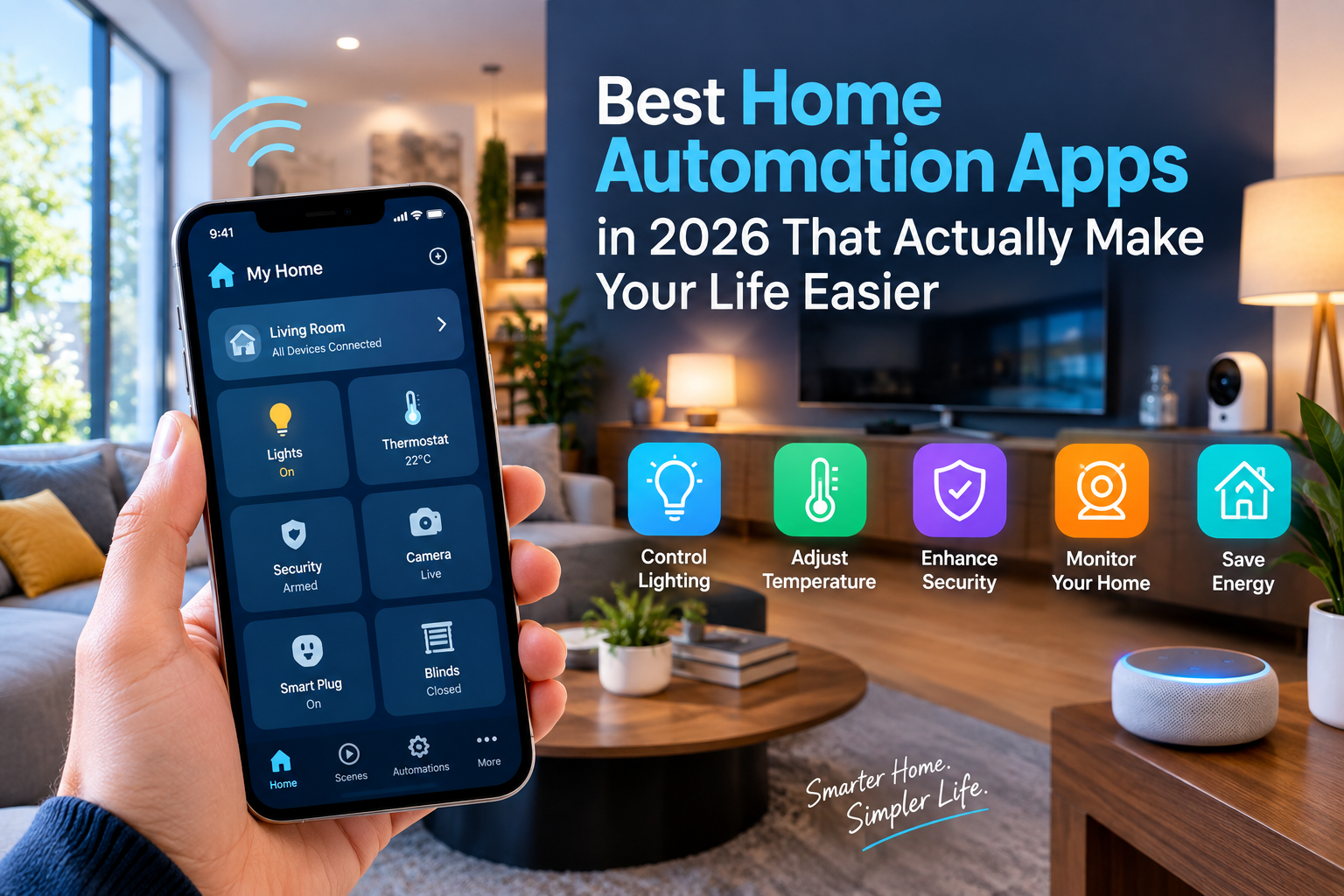
Beyond voice assistants, AI powers an ecosystem of connected devices that make homes more efficient and comfortable. Smart thermostats like Nest learn your temperature preferences and daily schedule, automatically adjusting heating and cooling to optimize comfort while minimizing energy waste. Smart lighting systems adapt brightness and color temperature based on time of day and occupancy, while security cameras use computer vision to distinguish between family members, delivery personnel, and potential intruders.
For businesses looking to develop intelligent home automation solutions, the integration of AI with IoT devices creates unprecedented opportunities for innovation and user experience enhancement.

AI-Powered Navigation and Transportation
Getting from point A to point B has been revolutionized by artificial intelligence, making travel more efficient, safer, and more convenient than ever before.
Intelligent Navigation Systems
Remember the days of printed maps and written directions? Google Maps and Apple Maps have transformed navigation using AI algorithms that process vast amounts of real-time data. These applications use machine learning to remember building edges, recognize house and building numbers, and understand changes in traffic flow to recommend routes that avoid congestion and roadblocks.
The AI doesn’t just show you the fastest route it adapts dynamically. If an accident occurs ahead, the system instantly recalculates and suggests alternatives. It predicts arrival times with remarkable accuracy by analyzing historical traffic patterns, current conditions, and even anticipated changes based on time of day and day of week.
Autonomous Vehicles and Ride-Sharing
Self-driving technology represents one of the most ambitious applications of AI in transportation. According to Stanford’s AI Index Report, Waymo provides over 150,000 autonomous rides weekly in the United States, while Baidu’s Apollo Go robotaxi fleet serves numerous cities across China. These vehicles use computer vision to identify pedestrians, vehicles, and road signs, sensor fusion to create comprehensive environmental awareness, predictive modeling to anticipate other drivers’ actions, and real-time decision-making to navigate complex traffic scenarios safely.
Ride-sharing platforms like Uber and Lyft leverage AI to match drivers with riders efficiently, predict demand to optimize driver availability, calculate dynamic pricing based on supply and demand, and estimate accurate arrival times. The AI in transportation market is expected to reach $6.8 billion by 2023, with a CAGR of 21.5% from 2018, reflecting the sector’s rapid transformation.
Organizations seeking to implement AI-powered transportation solutions can benefit from specialized expertise in machine learning and computer vision technologies.
AI in Communication and Social Media
How we communicate and consume content has been fundamentally reshaped by artificial intelligence, creating more personalized and engaging digital experiences.
Email Management and Smart Filtering
One of the most commonly used AI applications in everyday life is email spam filtering. According to AIPRM research, approximately 29.5% of people use AI-powered spam filters daily making it the most frequently used AI feature. Gmail’s and Outlook’s spam filters analyze message patterns using machine learning, identify phishing attempts through behavioral analysis, adapt to evolving spam tactics automatically, and learn from user actions to improve accuracy.
Beyond spam detection, AI-powered features like Google’s Smart Reply suggest quick responses based on email content. If someone asks about meeting availability, the AI might propose responses like “Sure, what time works for you?” or “I’m available after 2 PM.” These suggestions save time and maintain communication flow even when you’re busy.
Social Media Content Curation
Social media platforms heavily rely on AI to keep users engaged. Facebook, Instagram, TikTok, and Twitter use sophisticated algorithms to curate your feed based on engagement history, predict content you’ll find interesting, identify and remove problematic content, and suggest connections and groups that match your interests.
According to Vention’s AI Statistics, Netflix made 87% of its content decisions in 2024 using AI-powered data analytics. Similarly, social media recommendation engines analyze billions of interactions to determine what appears in your feed. The neural network architecture of deep learning enables these platforms to identify patterns in user behavior and content characteristics, creating highly personalized experiences.
McKinsey’s research shows that AI-driven customer service solutions can increase customer satisfaction by up to 10% while reducing call times by as much as 40% demonstrating AI’s value beyond content curation to customer interaction management.
AI in Entertainment and Shopping
Artificial intelligence has transformed how we discover entertainment and shop for products, creating uniquely personalized experiences that adapt to individual preferences.
Personalized Content Recommendations
Streaming platforms like Netflix, Spotify, YouTube, and Amazon Prime Video use AI recommendation engines that analyze viewing history, rate content based on preferences, predict what you’ll enjoy next, and curate playlists that match your mood. According to industry data, Netflix’s recommendation algorithm saves the company approximately $1 billion annually by reducing subscriber churn through improved content discovery.
Spotify’s Discover Weekly playlist, powered by collaborative filtering and deep learning, introduces millions of users to new music tailored to their tastes each week. These systems get smarter over time the more you watch, listen, or interact, the more accurate the recommendations become.
Intelligent E-Commerce Experiences
Online shopping has been revolutionized by AI applications that enhance both discovery and purchasing. Amazon, Flipkart, and other e-commerce platforms use AI to analyze browsing history and past purchases, suggest relevant products through recommendation engines, predict demand to optimize inventory, and detect fraudulent transactions before they’re completed.
According to Statista research, roughly one-third of interactions with e-commerce AI chatbots focus on product-related inquiries, while 20% involve order status and shipping questions. These chatbots provide 24/7 customer support, answer product questions instantly, guide users through purchase decisions, and handle return arrangements efficiently.

AI in Healthcare and Personal Wellness
Healthcare represents one of the most impactful areas where AI applications in everyday life are making a genuine difference in people’s wellbeing and longevity.
Fitness Tracking and Health Monitoring
Wearable devices like Apple Watch, Fitbit, and Samsung Galaxy Watch use AI algorithms to track physical activity and calories burned, monitor heart rate patterns and detect irregularities, analyze sleep quality and provide improvement suggestions, and predict potential health issues before symptoms appear.
According to Pew Research, 68% of adults correctly identified wearing a fitness tracker as an example of AI in everyday life, making it one of the most recognized AI applications. These devices don’t just collect data they use machine learning to establish personal baselines, identify trends over time, and provide actionable insights for healthier living.
AI-Powered Medical Consultation
Telemedicine and AI chatbots are expanding healthcare access globally. Research from Rest of World reveals that in China, where psychiatric appointments are expensive and hard to obtain, nearly half of young people surveyed had used AI chatbots to discuss mental health concerns. These AI systems provide 24/7 accessibility, immediate responses to health questions, symptom assessment and triage recommendations, and medication reminders and health coaching.
The FDA approved 223 AI-enabled medical devices in 2023, up from just six in 2015, demonstrating healthcare’s rapid embrace of AI technology. However, according to Balto’s 2025 Consumer Expectations Report, 48% of respondents still strongly prefer engaging with human healthcare agents, showing that AI augments rather than replaces human medical professionals.
The healthcare AI market was valued at $20.65 billion in 2023 and is projected to reach $187.95 billion by 2030 representing an 810% increase and confirming AI’s growing role in medical care.
AI in Financial Services and Security
Banking and financial services have embraced AI to protect consumers and streamline transactions, often working invisibly to prevent fraud and optimize financial decisions.
Fraud Detection and Prevention
Financial institutions use sophisticated AI systems to protect customers from fraudulent activity. Machine learning algorithms analyze transaction patterns in real-time, flagging unusual activity, comparing transactions against established behavioral baselines, identifying potential fraud before money is transferred, and adapting to new fraud tactics as they emerge.
Banks process millions of transactions daily, making human monitoring impossible. AI systems evaluate over 1,000 data points per transaction, according to industry reports, enabling them to catch suspicious patterns that would otherwise go unnoticed. When your credit card company texts you to verify a purchase that seems out of character, that’s AI protecting your account.
Personalized Banking Services
Beyond security, AI enhances everyday banking experiences through chatbots that handle routine inquiries 24/7, personalized investment advice based on financial goals, automatic categorization and analysis of spending patterns, and predictive insights about upcoming expenses or potential overdrafts.
According to Verified Market Research, the global market size for AI in finance reached $31.54 billion in 2024. Mobile banking apps use AI to help users save money, optimize spending, plan budgets, and even negotiate better rates on bills transforming personal finance management from a chore into an automated, intelligent process.
AI in Education and Professional Development
Education has been transformed by AI tools that personalize learning experiences and make knowledge more accessible to students worldwide.
Adaptive Learning Platforms
Educational technology platforms use AI to assess individual learning styles and pace, provide personalized lesson plans and practice problems, identify knowledge gaps and recommend targeted resources, and adapt difficulty levels based on performance. According to National University research, approximately 43% of higher education students utilize AI-powered tools to enhance their learning experiences.
Khan Academy, Duolingo, and Coursera leverage AI to create customized learning paths that help students master subjects more effectively than one-size-fits-all approaches. These platforms track progress, predict where students might struggle, and intervene with additional support before frustration sets in.
Professional Productivity Tools
In the workplace, AI tools boost productivity across various functions. According to McKinsey data, 27% of white-collar workers frequently used AI in their daily work in 2025, a 12-point increase from 2024. Among leadership, the number is higher: 33% of managers and executives use AI tools often.
Professional AI applications include writing assistants like Grammarly that improve communication, meeting summarizers that capture key points and action items, data analysis platforms that identify trends and insights, and code assistants that help developers write better software faster. PwC predicts that AI will drive productivity gains ranging from 20% to 30% in various sectors, with research showing that AI usage by coders increased their productivity by 26%.
For organizations looking to stay competitive, exploring more insights on AI and productivity can provide valuable strategies for implementation.

Emerging AI Applications Shaping Tomorrow
As AI technology continues advancing, new applications are emerging that will further integrate artificial intelligence into everyday activities.
AI in Sustainable Living
According to International Energy Agency reports, implementing AI technologies in energy management could increase energy efficiency by up to 20% by 2025. AI applications for sustainability include smart grid optimization that balances renewable energy sources, precision agriculture that reduces water usage by up to 30%, waste management systems that optimize recycling routes, and carbon footprint tracking that helps individuals and businesses reduce emissions.
Generative AI and Creative Tools
Generative AI has exploded onto the scene, creating everything from marketing copy to computer code. Tools like ChatGPT, DALL-E, Midjourney, and Stable Diffusion enable users to generate text, images, code, and even video content through simple text prompts. According to Salesforce research, 73% of the Indian population surveyed is using generative AI, while 45% of the US population surveyed uses these tools.
The generative AI market is projected to reach $59.01 billion in 2025 and grow to $400 billion by 2031, with an expected annual growth rate of 37.57%. This explosive growth reflects how quickly these tools have become essential for creative professionals, marketers, and everyday users seeking to enhance their creative output.
AI Companionship and Mental Health Support
In regions where access to mental health services is limited, AI chatbots are providing crucial emotional support. Research from Rest of World shows that AI companionship robots are given to seniors living alone in South Korea, who treat the dolls like grandchildren, while humanoid robots lead exercise sessions for elderly individuals with dementia in Singapore.
While these applications raise important questions about human connection and care, they also demonstrate AI’s potential to address loneliness, provide consistent emotional support, offer accessible mental health resources, and reduce caregiver burden in aging populations.
Organizations developing healthcare and wellness applications must balance AI’s capabilities with the irreplaceable value of human empathy and connection.
The Impact and Future of AI in Daily Life
Understanding how is AI used in everyday life reveals a technology that has moved from experimental labs to essential infrastructure powering modern society.
Current State of AI Adoption
The statistics paint a clear picture of AI’s ubiquity. According to TheySaid research, 79% of people interact with AI-powered tools daily, even though only 27% believe they do highlighting the invisible integration of AI into routine activities. OpenAI’s research analyzing 1.5 million conversations shows that most ChatGPT usage focuses on everyday tasks like seeking information and practical guidance, with users increasingly relying on AI for both personal and professional needs.
The gender gap in AI usage is closing rapidly. In January 2024, among users with names that could be classified as either masculine or feminine, 37% had typically feminine names. By July 2025, that share had risen to 52%, demonstrating broadening adoption across demographics.
Preparing for an AI-Integrated Future
As AI becomes more sophisticated and accessible, individuals and organizations must adapt. According to research, 60% of global companies will require employees to have basic AI skills by 2028 to stay competitive, making upskilling a workforce necessity. The AI-driven job market is expected to grow by 38% annually from 2024 to 2030 as AI adoption expands across sectors.
Rather than viewing AI as a threat, forward-thinking individuals and businesses recognize it as an augmentation tool that handles repetitive tasks, provides data-driven insights, personalizes user experiences, and frees humans to focus on creative and strategic work.
For businesses looking to stay ahead of these trends and implement responsible AI solutions effectively, partnering with experienced technology providers can provide essential guidance and expertise.
Conclusion
Understanding how is AI used in everyday life reveals a technology revolution that has quietly transformed virtually every aspect of modern existence. From the smart alarm that wakes you based on your sleep cycle to the fraud detection system protecting your last purchase, AI works continuously behind the scenes to make life more efficient, personalized, and secure. According to Gartner research, by 2025, 80% of customer service teams will be using generative AI technology to enhance productivity demonstrating that AI adoption is accelerating across all sectors and touching every industry.
The real-world examples we’ve explored virtual assistants managing our schedules, navigation systems optimizing our routes, recommendation engines curating our entertainment, health monitors tracking our wellness, and fraud detection systems protecting our finances represent just the beginning of AI’s potential impact. With 78% of organizations now using AI in at least one business function, the technology has moved from experimental to essential. The key question isn’t whether to embrace AI, but how to do so responsibly while preserving human agency and values.
For individuals, staying informed about AI applications and developing basic AI literacy will become increasingly important. For businesses, implementing AI strategically can drive competitive advantage, improve customer experiences, and unlock new opportunities for innovation. At Intrasoft Technologies, we help organizations navigate AI integration with expertise that balances technological capability with practical business needs. Ready to explore how AI can transform your operations? Discover more insights about artificial intelligence applications and innovative technology solutions that are shaping the future of work and life.
Frequently Asked Questions (FAQs)
Q1: What are the most common examples of AI in everyday life?
AI is used in email spam filters, virtual assistants like Siri and Alexa, navigation apps, personalized recommendations on streaming platforms, and facial recognition for phones and photos.
Q2: How does AI improve productivity in daily tasks?
AI boosts productivity by automating tasks like email sorting, smart replies, meeting summarization, scheduling, and data analysis, increasing efficiency by 20-30% in various sectors.
Q3: Is AI safe to use in personal applications like banking and healthcare?
AI in banking and healthcare is generally safe when backed by strong security, but human judgment should still be used for critical decisions. Secure platforms and privacy measures are essential.
Q4: How much does the average person interact with AI without realizing it?
Most people interact with AI daily (e.g., email filters, social media recommendations, predictive text) but are often unaware due to its seamless integration into everyday tools.
Q5: What skills do people need to prepare for an AI-integrated future?
Skills needed include AI literacy, prompt engineering, data analysis, digital fluency, and adaptability. Creativity, emotional intelligence, and strategic thinking remain valuable human strengths in an AI world.